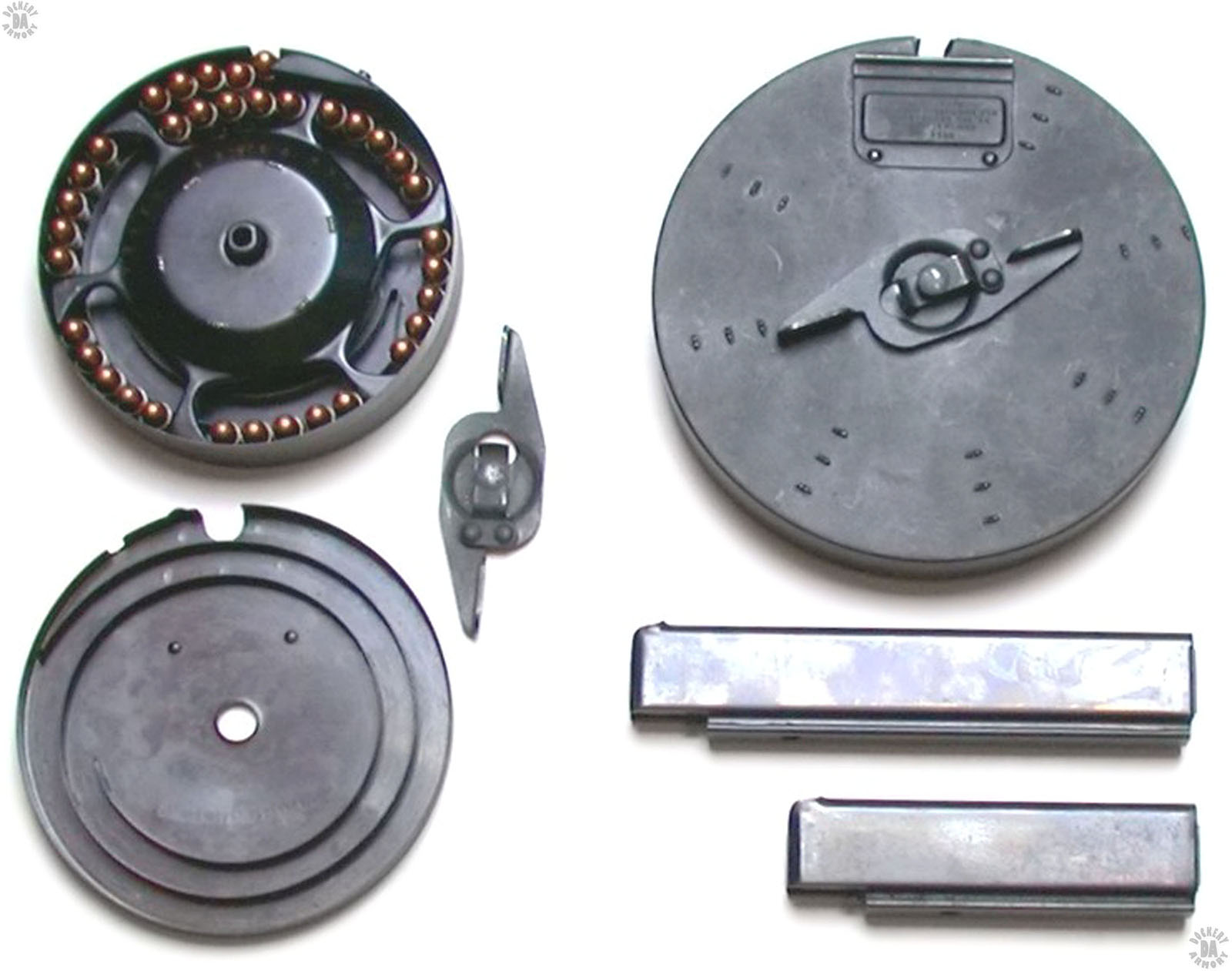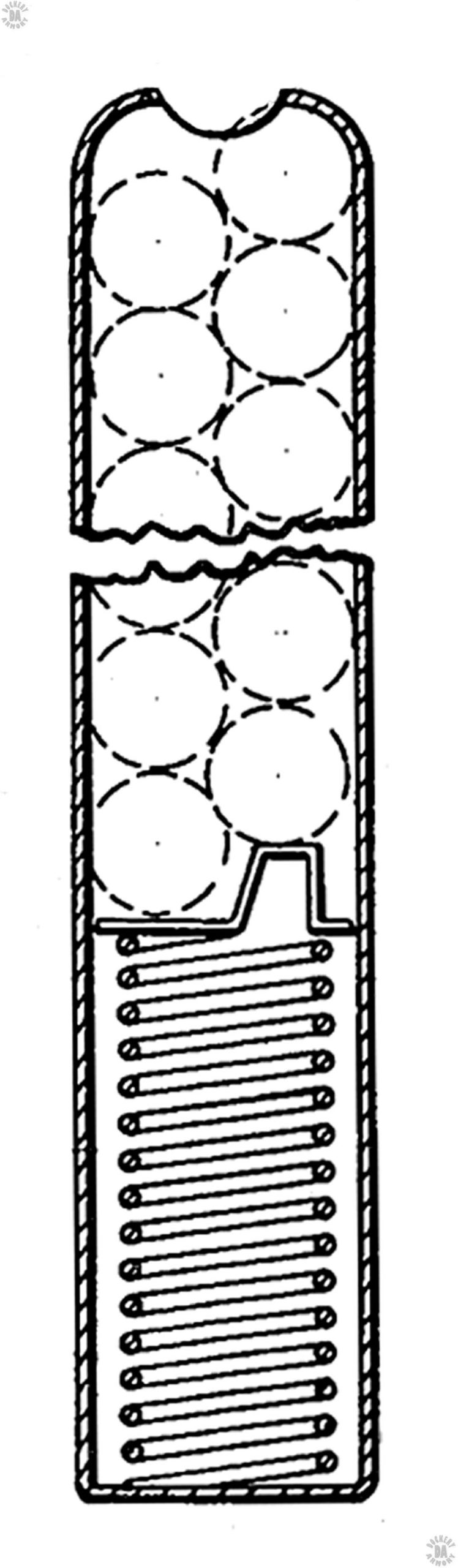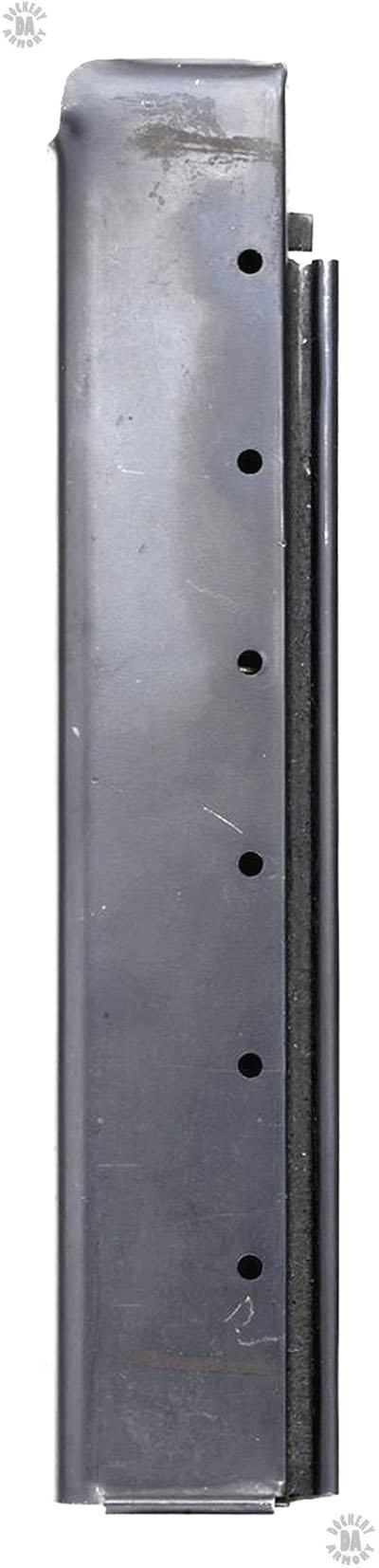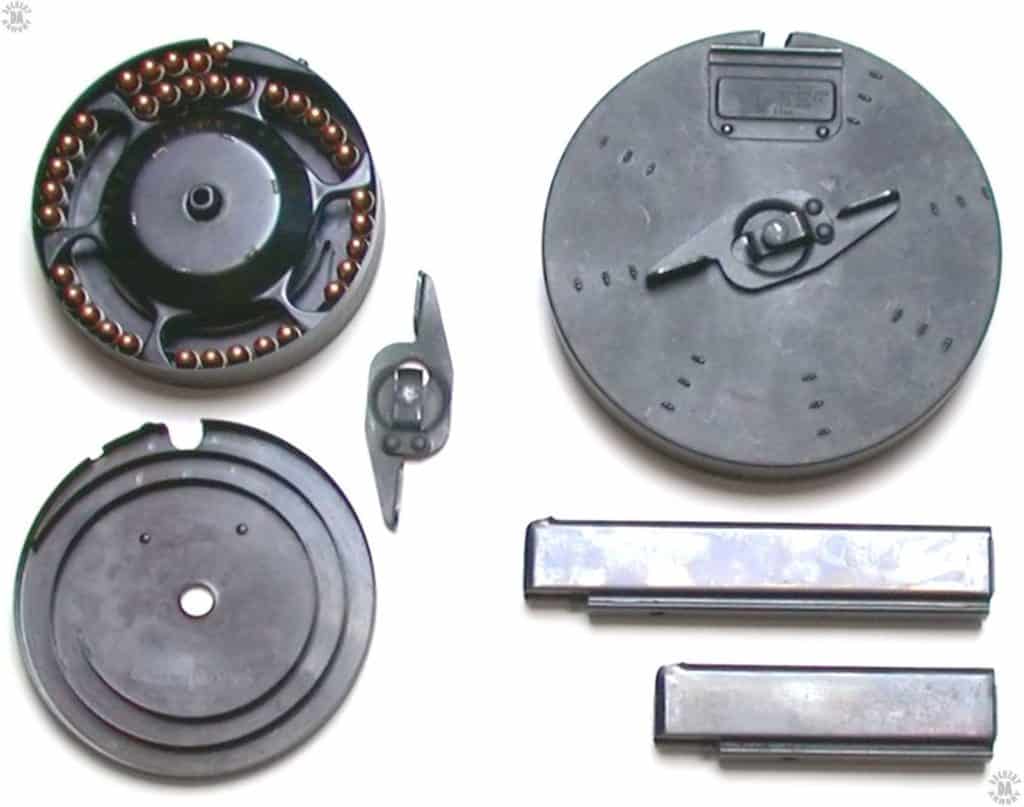
The Thompson family of submachineguns used some of the first magazines of their type, both box and drum magazines. The box magazine first seen in the Thompson Patent application of 1919, the Model “XX” for its 20-round capacity, was one of the first double-column, double feed designs used in a submachinegun. The double column, double feed system makes for a much simpler layout in the manufacture of the magazine, as well as being very easy to load by hand as well as to feed the rounds. By World War II (December 1941) the longer 30-round box magazine, using the same double column, double feed design, was adopted by the US Military.
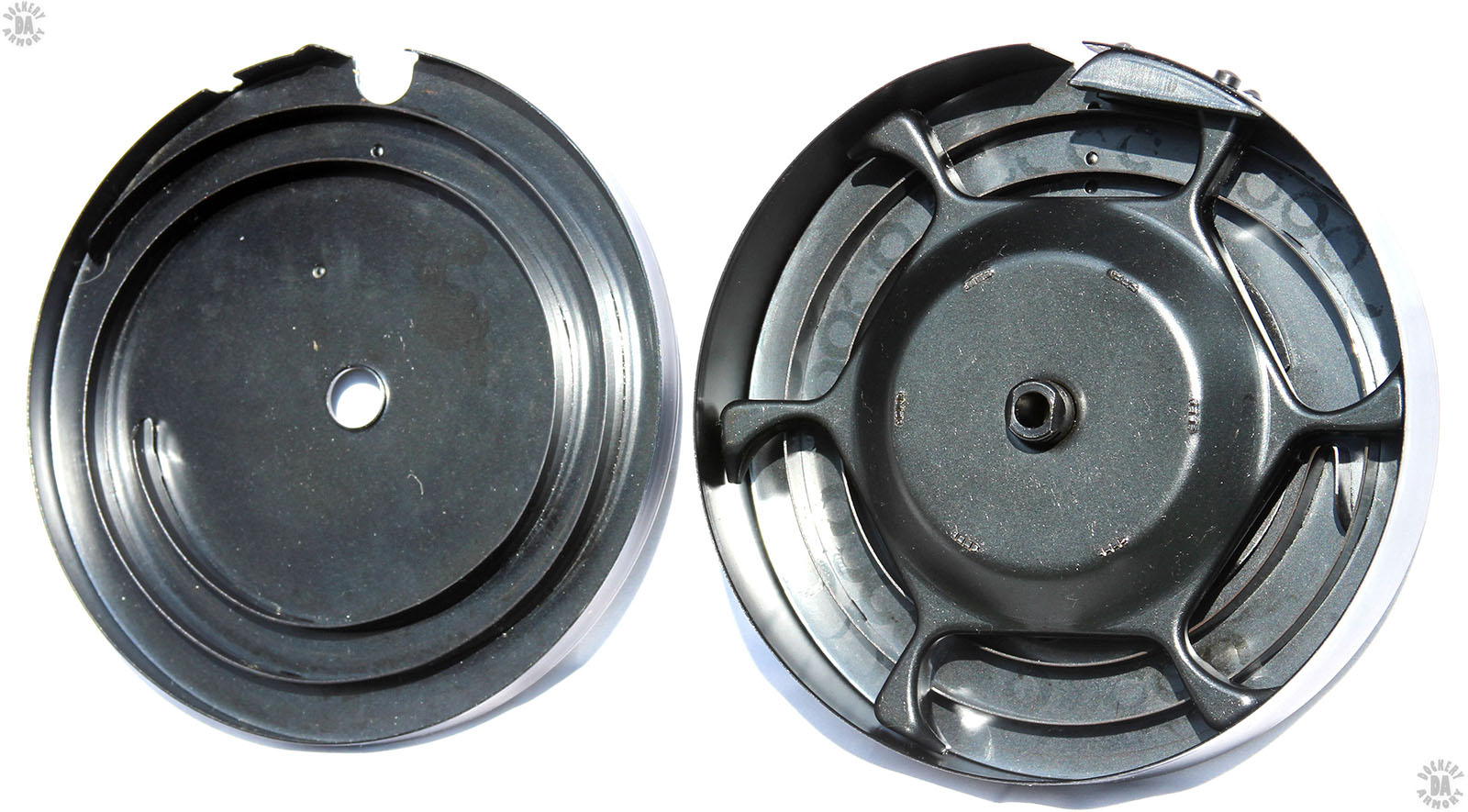
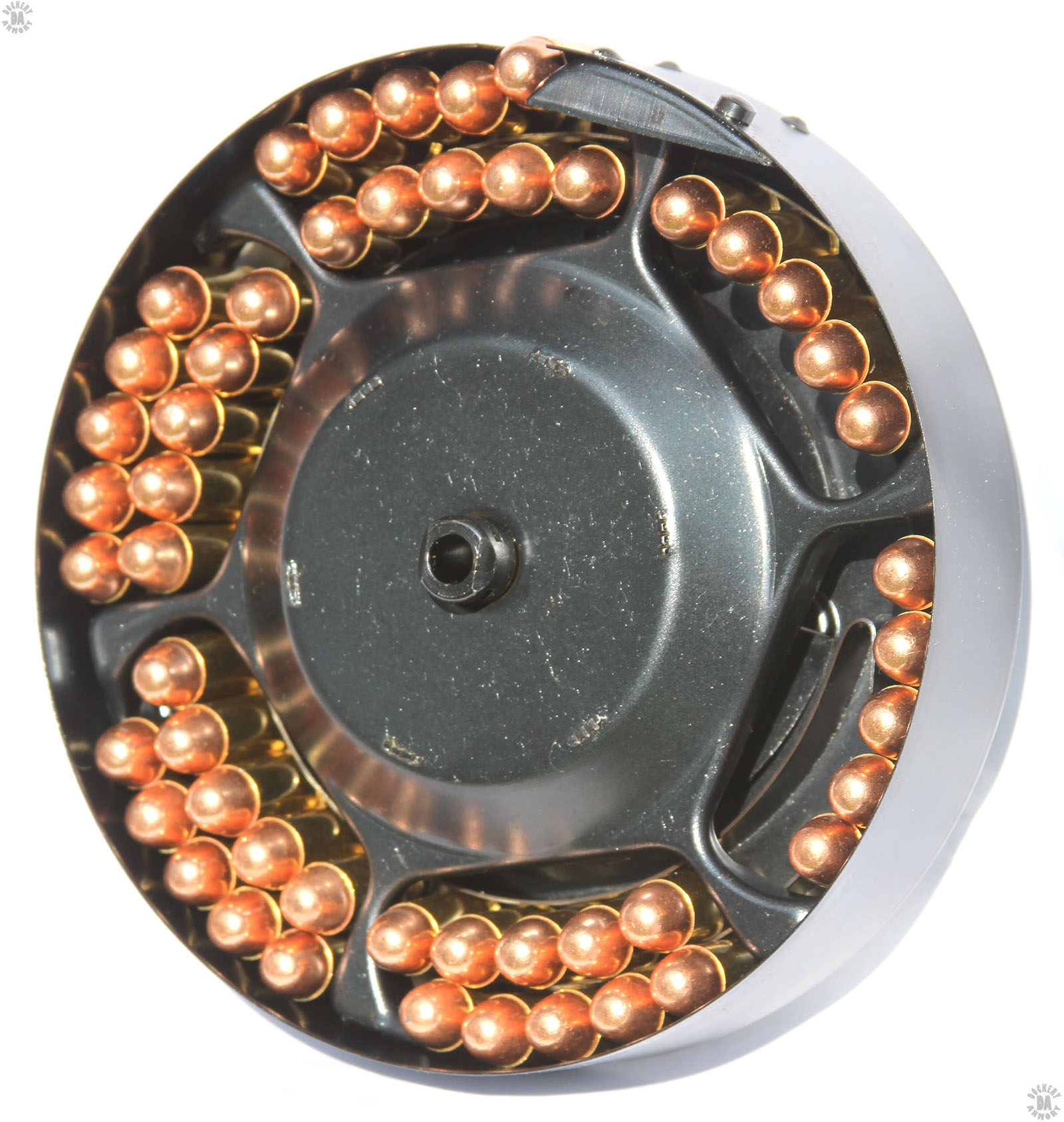
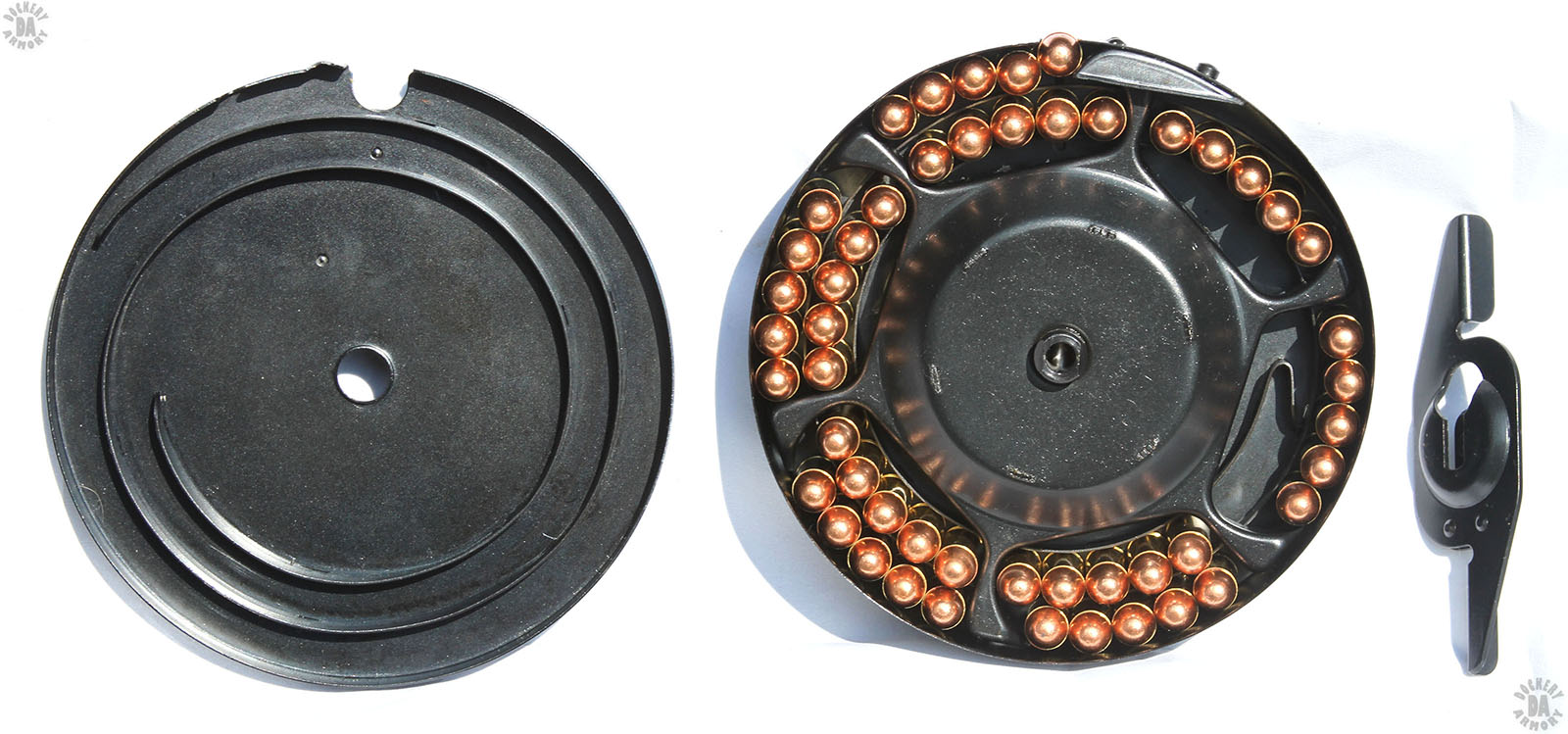
One of the most notable magazines used in the Thompson designs were the large capacity drums that were available very early in its marketing life. The drums held either 50 or 100 rounds each, called the Type “L” and Type “C” following the Roman numeral names for their respective capacity. The drums both operated by a spring driven multi-armed “star” that would push the rounds along curved spiral tracks up to the feed mouth at the top of the magazine. The L 50-round drum held the rounds in two rows of ammunition, while the larger C 100-round drum drove three rows of ammunition. Printed on the outside of the drums were the number of “clicks” that the central drive spring was to be wound up in order to properly feed the ammunition. This was most often 9 clicks for the 50-round drum and 15 clicks for the 100 round model.
The drums were considered heavy for their purpose, supplying a large number of rounds to an automatic weapon. The C model 100-round drum was considered very heavy and soon was dropped from the market. During World War II, though the 50-round drum was liked for the number of rounds it held, it was considered heavy as well as noisy to carry while on patrol. The loose rounds would rattle about within the feed spirals while the magazine was moved. The noise wasn’t a consideration for police use, but soldiers did not particularly want to draw attention while moving in the dark. The 50-round drum was also complex and costly to manufacture so it was dropped from production earlier in World War II.