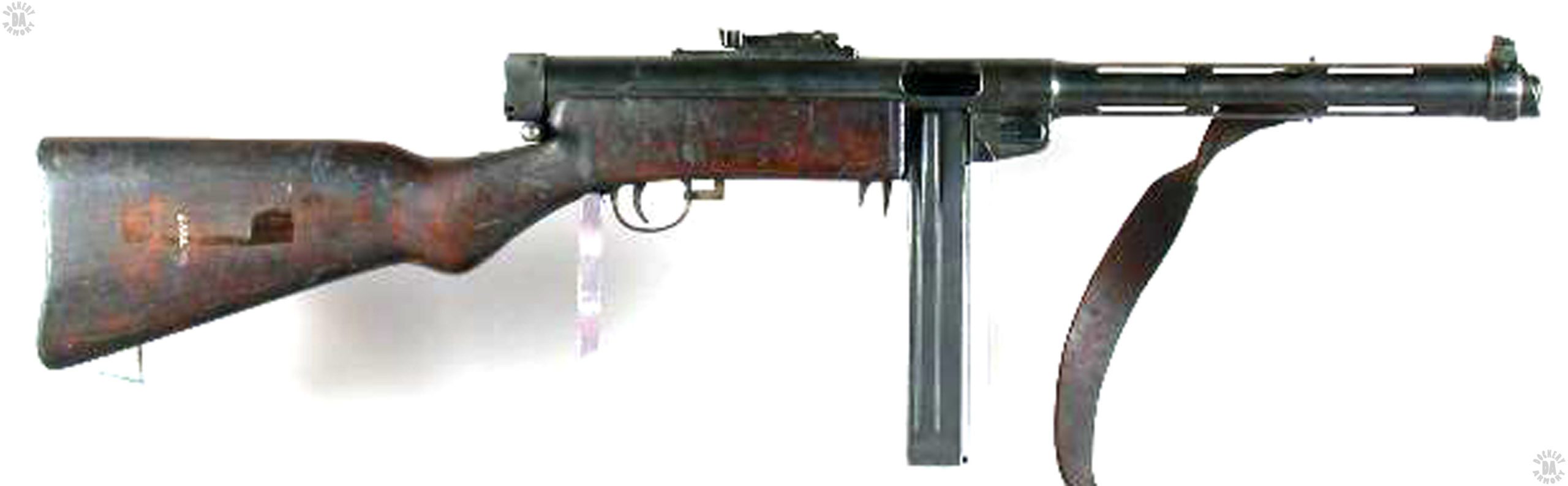
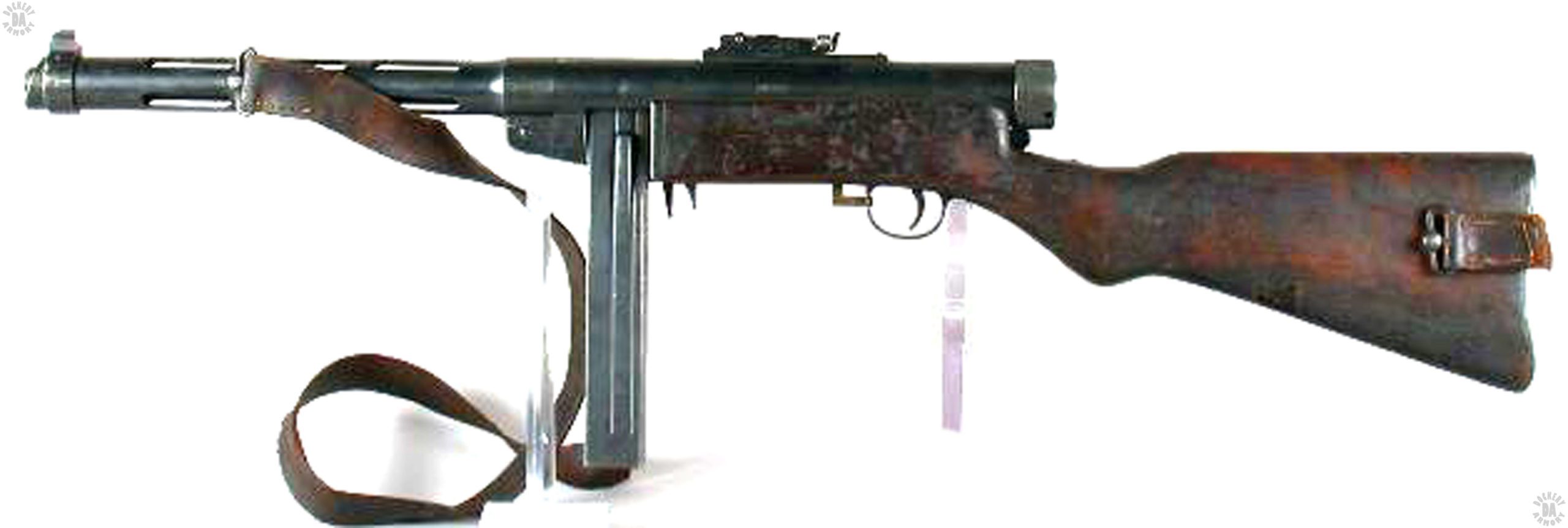
CODE – 02-036-931

NAME – Suomi Model 1931 (1932)

NAME (NATIVE) – Suomi-konepistooli Osakeyhtio, KP/31

COMMON NAMES – Suomi KP/31

COUNTRY OF ORIGIN – Finland

DATE OF MANUFACTURE – 1931

CALIBER – 9x19mm

OVERALL LENGTH – 87 cm (34.25 in), 92.5 cm (36.4 in) w/compensator

BARREL LENGTH – 31.4 cm (12.4 in)

RIFLING (TYPE & TWIST) – 6 Groove, Right-hand twist

BULLET DIAMETER – 9.02 mm (0.355 in)

BULLET WEIGHT – 8.04 g (124 grains)

MUZZLE VELOCITY – 400 m/s (1312 fps)

MUZZLE ENERGY – 643 j (474 ft/lb)

WEIGHT (EMPTY) – 4.72 kg (10 lb 6.5 oz), 4.9 kg (10 lb 12.8 oz) w/compensator

WEIGHT (LOADED) – 6.71 kg (14 lb 12.7 oz) loaded with 71 round drum, 6.89 kg (15 lb 3 oz) with compensator and 71 round drum

SIGHTS – Front sight – blade, Rear sight – V-notch tangent, adjustable from 100 to 500 meters (109 to 587 yards) in 100 meter (109 yard) increments

EFFECTIVE RANGE – 200 m (219 yds)

OPERATION – Blowback, advanced primer ignition, fires from open bolt

TYPE OF FIRE – Selective fire, Semi and Full automatic

RATE OF FIRE – 60 rpm Semi, 142 rpm Full

CYCLIC ROF – 900 rpm

FEED DEVICE – 20 round box magazine, double column, single feed, 36 or 50 (1941-1943) round box magazine, quadruple row, single feed, 40 or 71 round drum

FEED DEVICE WEIGHT (EMPTY) – 20 round box magazine– 0.2 kg (7.1 oz)

36 round box magazine – 0.40 kg (14.1 oz) (1954-1958),

50 round box magazine – 0.39 kg (13.8 oz),

40 round drum magazine – 0.9 kg (1 lb 15.8 oz),

71 round drum magazine – 1.1 kg (2 lb 6.8 oz)

FEED DEVICE WEIGHT (LOADED) – 20 round box magazine– 0.45 kg (15.9 oz)

36 round box magazine – 0.85 kg (1 lb 14 oz)

50 round box magazine – 1.02 kg (2 lb 4 oz),

40 round drum magazine – 1.40 kg (3 lb 1.4 oz),

71 round drum magazine – 1.99 kg (4 lb 6.2 oz)

BASIC LOAD – 5 – 71 round drums (355 rounds)

LOAD WT – 9.95 kg (21 lb 15 oz)

MANUFACTURER – Oy Tikkakoski Ab, Jyväskylä, Finland

STATUS – Obsolete

SERVICE – Finnish military from 1931 to 1998, also used by the Swedish and Polish military as well as in modified form by the Swiss. Produced commercially for international sales by Husqvarna in Sweden.

     The weapon, designed by A.J. Lahti, is probably one of the longest serving submachineguns in the world, being in the Finnish military for well over half a century. It is still in second-line storage in that country. 4,000 of these weapons were in the hands of Finnish forces at the beginning of the Winter War with the Soviet Union (30 Nov 1939 to 13 Mar 1940). In the heavily forested lands of Finland, the sudden high volume of fire from trained men with submachineguns rules the battleground. By the end of its production run in 1953, an estimated 80,000 weapons had been produced. This submachinegun was also one of the most influential in terms of numbers. Prior to the Soviets facing the Finns during the Winter War, the military command had little use for submachineguns, considering them “gangster” weapons. After facing the Finnish Military and effectively losing the Winter War, the Soviets mind was changed and they produced drum-fed submachineguns by the millions. It has been reported that Stalin himself held up the production of the PPSh-41 submachinegun until a copy of the Finnish drum magazine was completed.

     The barrel removal system and retracting cocking handle were the two major features kept from the Suomi Model 1926 when the Model 1931 was designed. An extensive series of prototype designs extended from the Model 1926 to the final adoption of the Model 1931 by the Finnish military. When the weapon was officially adopted, it was yet to go in to full serial production. By 1932, this problem was eliminated and the new Suomi submachinegun was coming off the assembly lines in reasonable numbers. It was this wait in production that also has the Suomi known under the designation Model 1932.

    The Model 31 was a carefully crafted weapon, turned out by milling and lathe turning. The receiver was machined from solid stock as were all of the parts. The base metal was in many cases, the finest Swedish chromium-nickle alloy available. The barrels (two were issued with each weapon) were also machined from solid stock. Some were manufactured by a producer of competition weapons and he made his M31 barrels of the same quality as his other barrels. The result of this meticulous work was a heavy submachinegun, and one of the most accurate of its kind ever produced.

    The operating system of the Model 31 utilized the advanced primer ignition method of firing. The firing pin protruded 1.0 to 1.25mm (.039 to .049 in) from the face of the bolt. The primer of the chambered round would be fired while the bolt was still moving forward. This forced the blowback of the cartridge case to first overcome the forward inertial of the bolt and then get it moving backward. This system helps assure that the bullet has left the barrel and propellant gases have lowered to a safe pressure well before the cartridge case has left the chamber.

     To feed the Model 31, and entire family of magazines were produced. The first magazines produced for the Model 31 were straight body 20 round box magazines. These magazines were relatively weak and easily damaged. Lahti designed what was called the “Ranger Magazine” due to its relatively small size, and capacity. The Ranger magazine was a spring-loaded drum with an internal sprocket driving 40 rounds of ammunition into the weapon. Army Lieutenant Y. Koskinen, who was working with Lahti, designed a larger 71-round drum that worked very well.  In 1935 and 36, thousands of the 71-round drums were ordered by the military. With an additional order for 21,000 drums issued in January, 1937, the 71 round drums became the standard magazine for the Model 1931. Remaining 40 round drums were considered disposable by Finnish forces on the front lines during the Winter War as they were very difficult to reload and reuse in combat conditions. The large number of magazines issued with the weapon are intended to allow the gunner to maintain his actions in the field, and to take on a large number of enemy troops.

     The Swedish government, who had bought Model 1931 submachineguns and were producing them under license, found the 71-round drum too heavy and complicated to produce and use. They developed a 50-round box magazine that used four columns of cartridges, two columns of double stacks separated by a metal sheet. The columns squeezed down to a single feed point for cartridges to guide into the weapon. A drawback of the design was that it required a loading tool for the operator to get anything near a full magazine loaded with ammunition. Even with the loading tool, it was recommended to only load the magazine to 40 or 45 rounds to prevent feeding problems. The Finnish military approved of the new “Coffin” magazine, so called because of the shape of the magazine body, and began producing them in Finland in 1940. In the 1950s, the Finns adopted the new 36-round Swedish magazine, originally produced for their Carl Gustave M45 submachinegun.

     There was a problem with the Model 31 that came out in combat. The gun had a tendency to climb as it was fired on full automatic. This is very common among submachineguns but was quickly addressed by the Finns. In February, 1943, the orders went out that all Model 31 submachine guns would be fitted with an Ordnance Department designed muzzle brake. The brake was 95 mm (3.74 in) long and 28 mm (1.1 in) in diameter. It added 55 mm (2.17 in) to the overall length of the weapon.


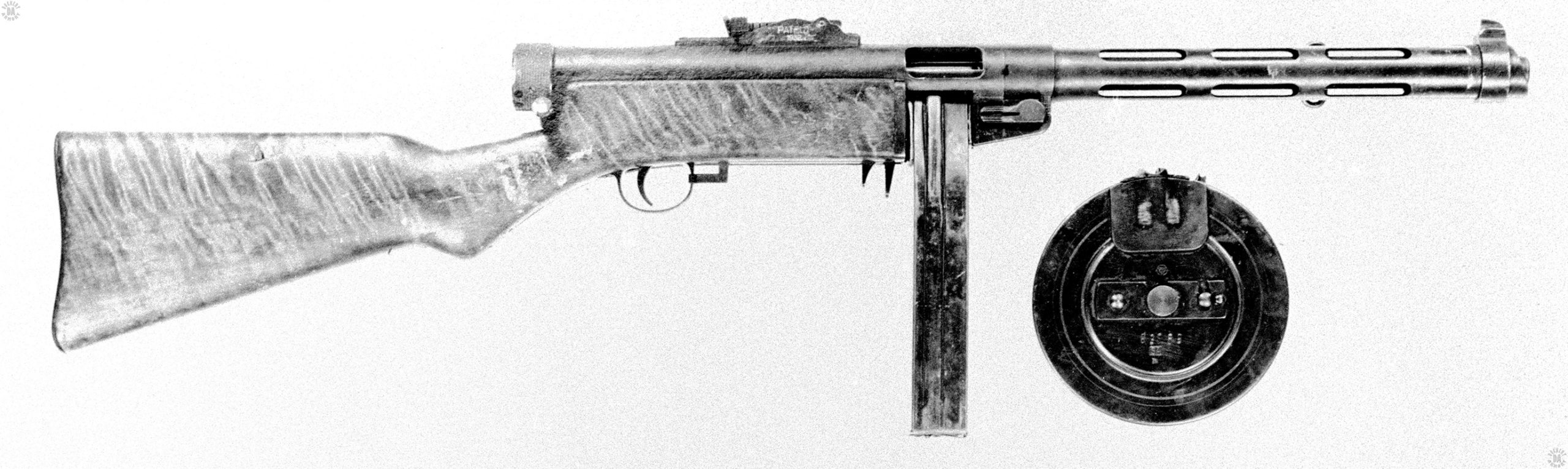
The right side of the Suomi M31 with both the 50-round box magazine (inserted in the weapon) and the 71-round drum to the right in the picture. At the front of the trigger guard is the safety and selector switch. With the switch in the fully forward position, as it is on this specimen, the weapon is set for full automatic fire. With the switch pulled back to the middle position, the weapon will fire on semiautomatic only. Pulling the switch all the way back locks the weapon on safe. When the weapon is placed on safe, the bolt is locked in position whether cocked or uncocked. The barrel jacket locking lever is on the bottom rear of the barrel jacket, just in front of the magazine well. The magazine catch is the longer lever just behind the magazine well. The rear lever is a guard to prevent the magazine catch from being operated accidentally. The cocking lever is the small knob underneath the rear of the receiver. PHOTO CREDIT: US ARMY

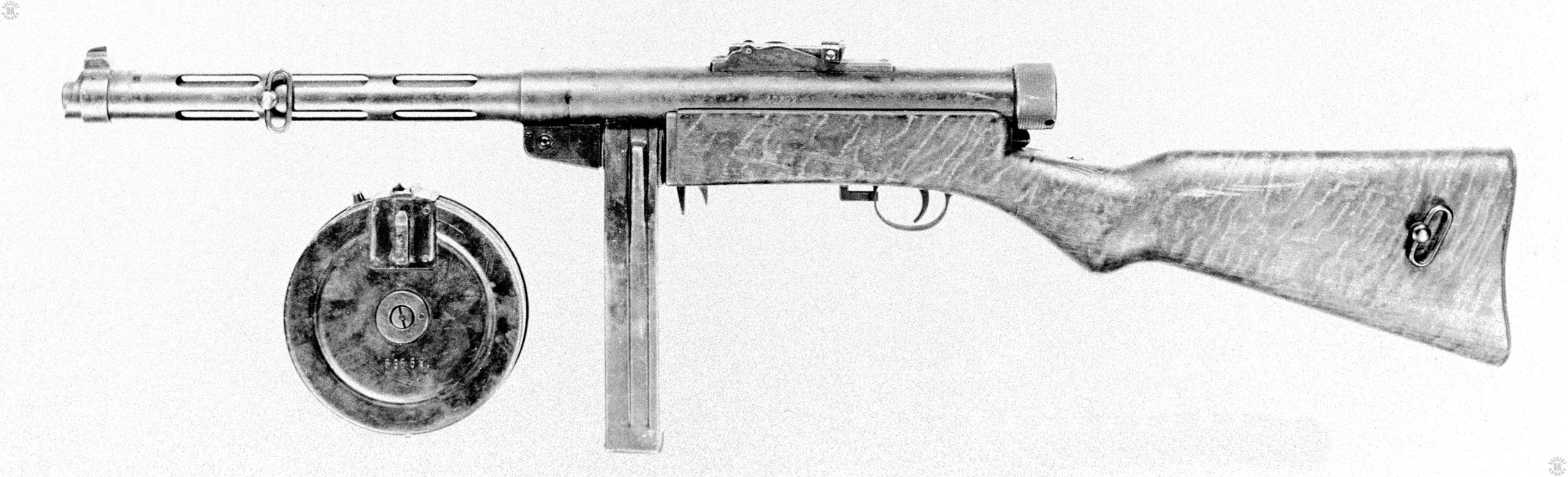
A left-side view of the Model 31 submachinegun with the weapon loaded with a 50 round box magazine. The rear of the drum magazine is on the left in the picture. In this rear view of the 71-round drum, to the left of the box magazine, the magazine catch can be seen. Above and ahead of the drum, is the front sling swivel mounted on the barrel jacket. The safety/selector switch at the front of the trigger guard is in the fully forward, full automatic fire, position. PHOTO CREDIT: US ARMY

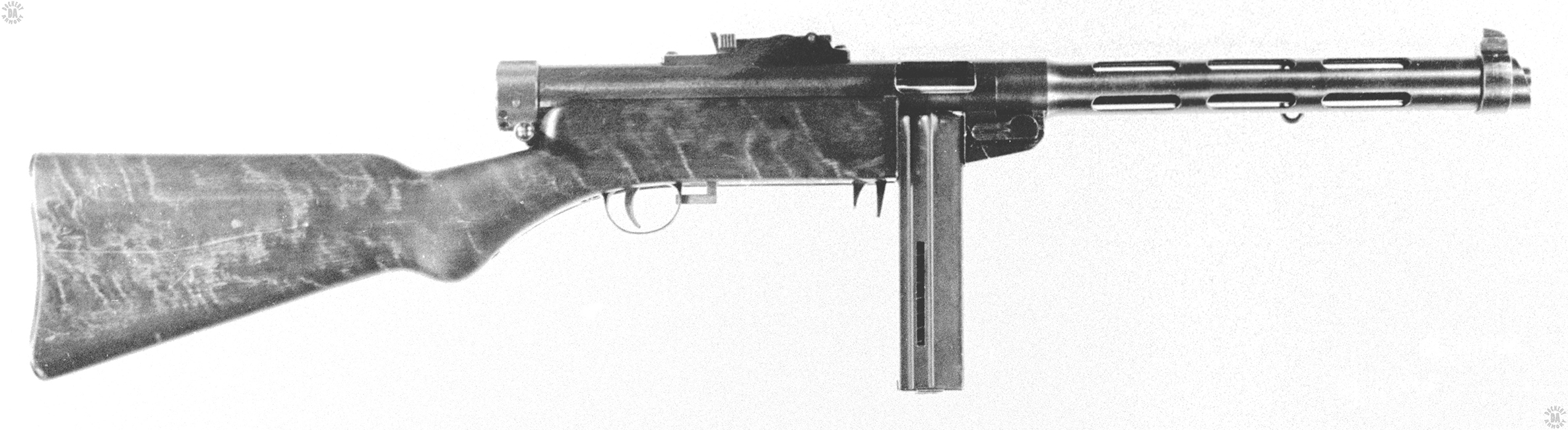
This specimen of the Suomi Model 31 submachinegun is loaded with the early 20-round magazine. There is an open slot along the side of the magazine so the number of rounds remaining can be seen. This slot also allowed dirt and debris to enter the magazine body, possibly causing jams. PHOTO CREDIT: US ARMY

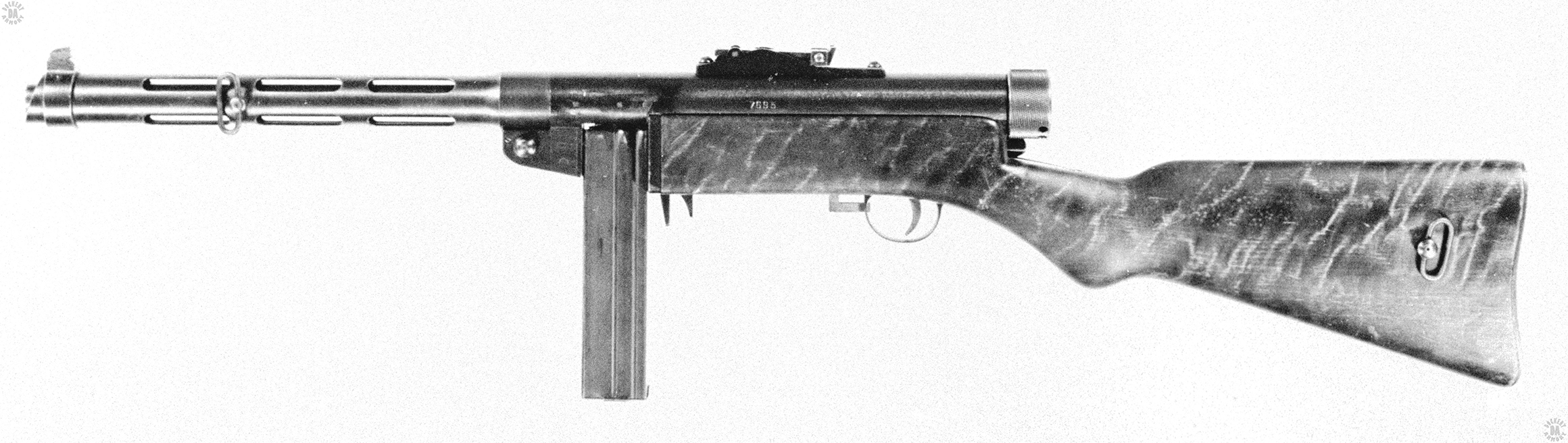
The right side of a Suomi Model 1931 submachinegun loaded with the 20-round magazine. This particular specimen number 7595, has been fitted with a particularly fancy grade of wood showing a good deal of figure throughout the stock. PHOTO CREDIT: US ARMY

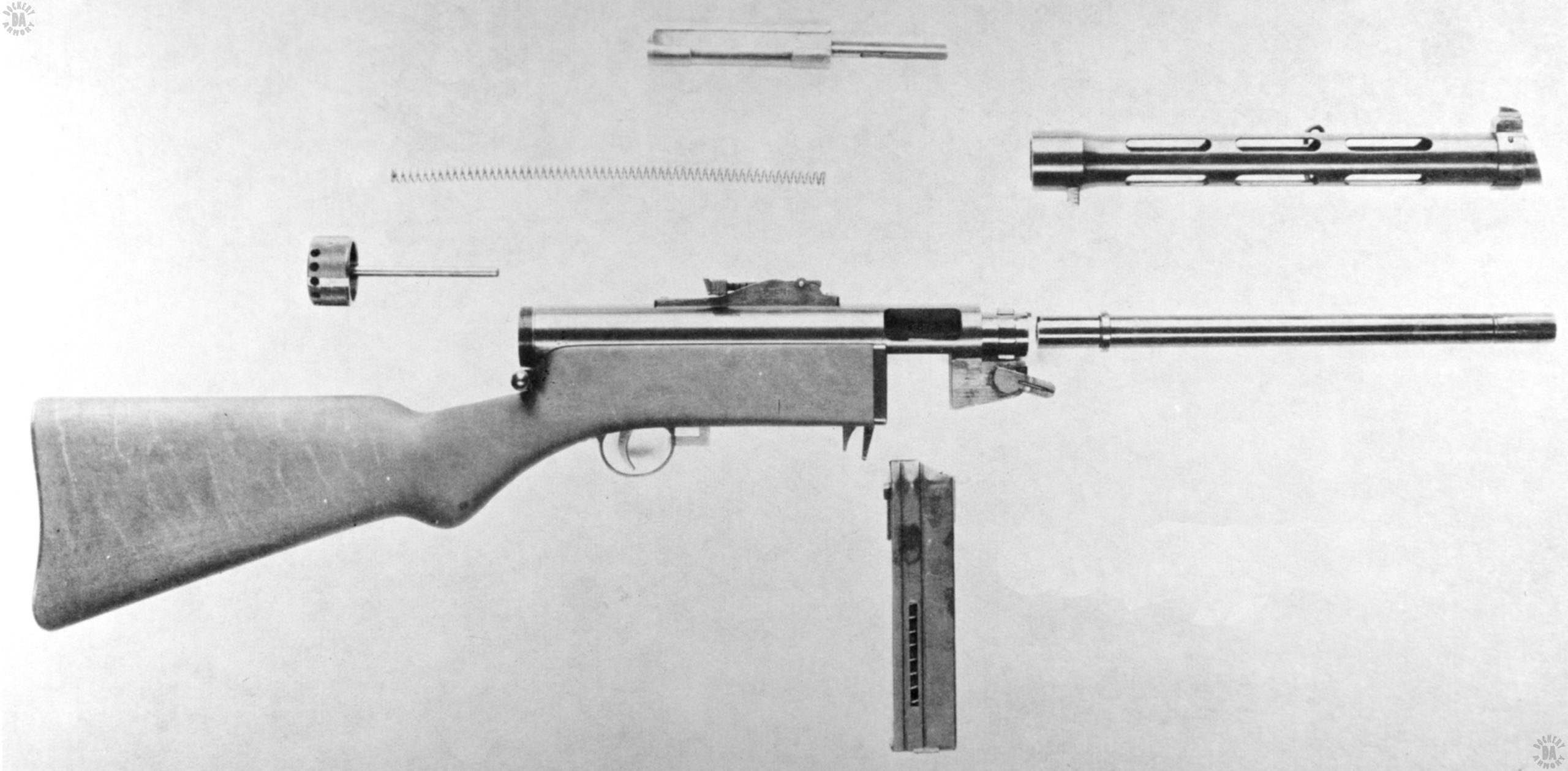
A filed-stripped view of the Suomi M32. The magazine at the bottom center of the illustration is the 20-round model with the inspection port on the right side. The barrel jacket clamp, ahead of the magazine well, has been rotated forward to release the barrel jacket. Just in front of the receiver is the separated barrel itself. Above the barrel is the machined barrel jacket, removed so that the barrel can come out of the receiver. At the opposite end of the receiver is the receiver end cap. The long thin rod that extends out from the end cap supports the recoil spring, that is shown above the receiver and end cap. At the top center of the illustration is the bolt. The long, thin forward section of the bolt feeds the rounds into the chamber of the barrel while the main mass of the bolt is in the thicker section at the rear. PHOTO CREDIT: US ARMY

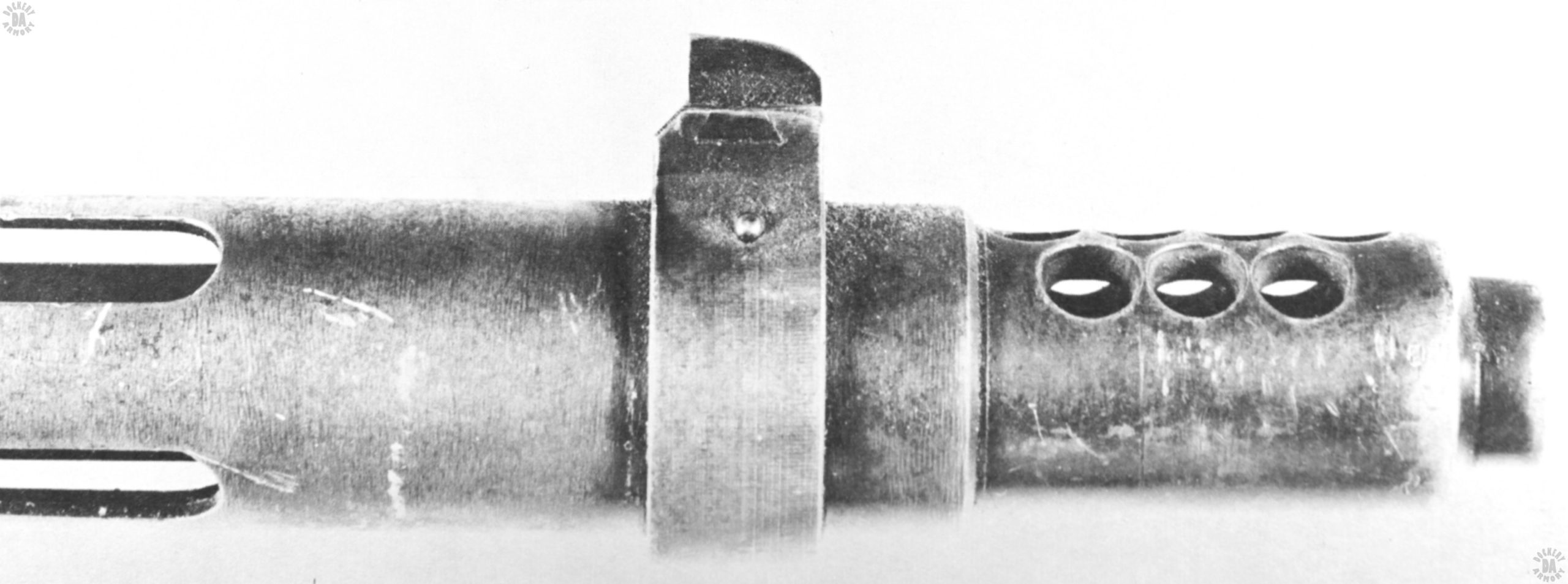
The muzzle compensator developed by the Finns in 1943 attached to the muzzle of a Model 1931 Suomi. The large holes at the top of the compensator are intended to guide the expanding muzzle blast upwards, partially countering the tendency for the muzzle to rise on full automatic fire. PHOTO CREDIT: US ARMY

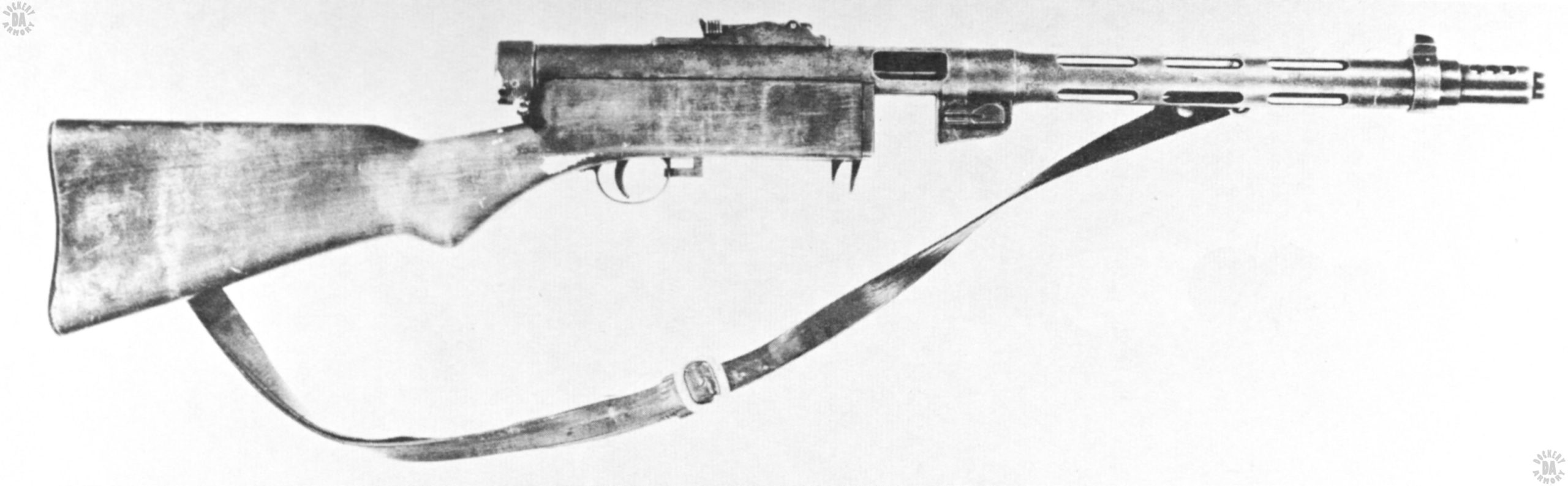
The right side of a Suomi Model 1931 submachinegun with the wartime compensator in place. The compensator is secure on the front portion of the barrel jacket. PHOTO CREDIT: US ARMY

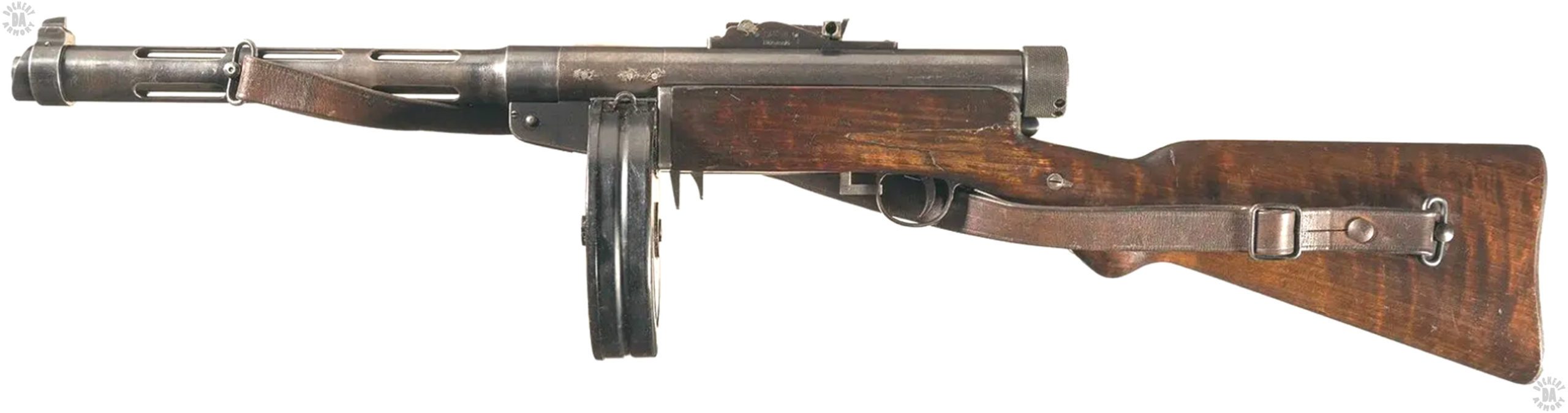
The left side of a Suomi Model 31 with the sling wrapped around to the right side. The weapon is loaded with the 71-round drum magazine. On the upper side of the drum can be seen the loop welded into the drum for a lanyard of other carrying aid.  The “L” shaped safety/selector switch at the front of the trigger guard is moved fully forward in the full automatic fire position. PHOTO CREDIT: ROCK ISLAND AUCTIONS
The left side of a Suomi Model 31 with the sling wrapped around to the right side. The weapon is loaded with the 71-round drum magazine. On the upper side of the drum can be seen the loop welded into the drum for a lanyard of other carrying aid. The “L” shaped safety/selector switch at the front of the trigger guard is moved fully forward in the full automatic fire position. PHOTO CREDIT: ROCK ISLAND AUCTIONS

A left-side view of a Suomi Model 1931 with the bolt cocked. The “L” shaped safety/selector switch at the front of the trigger guard is moved fully forward and set in the full automatic fire position. This specimen is loaded with a 50-round “Coffin” box magazine. The quadruple-column stack of ammunition in the magazine gave it a very wide body and an unusual set of followers inside of the magazine. The followers had extended side pieces that helped lift the cartridge stacks as the weapon was fired. Near the top of the magazine, the follower side pieces would stop at the top of the groove seen near the top rear on the side of the magazine. The inside portion of the follower would lift the last few round up into place for feeding. PHOTO CREDIT: Springfield Armory National Historical Site

A left-side view of a Suomi Model 1931 with the bolt cocked. The “L” shaped safety/selector switch at the front of the trigger guard is moved fully forward and set in the full automatic fire position. This specimen is loaded with a 50-round “Coffin” box magazine. The quadruple-column stack of ammunition in the magazine gave it a very wide body and an unusual set of followers inside of the magazine. The followers had extended side pieces that helped lift the cartridge stacks as the weapon was fired. Near the top of the magazine, the follower side pieces would stop at the top of the groove seen near the top rear on the side of the magazine. The inside portion of the follower would lift the last few round up into place for feeding. PHOTO CREDIT: Springfield Armory National Historical Site