CODE – 02-132-971

NAME – SIONICS M10 9mm Suppressor

COMMON NAMES – MAC10 9mm Can

COUNTRY OF ORIGIN – USA

DATE OF MANUFACTURE – 1971

WEAPON USED WITH – Ingram M10 9mm, SWD M11/Nine

CALIBER – 9x19mm

OVERALL LENGTH – 29 cm (11.44 in)

DIAMETER – 5.4 cm (2.13 in)

WEIGHT – 0.54 kg (1.20 lb)

MOUNTING – Threaded screw-on, ¾ in-10 tpi NC Threads

OPERATION – Two-stage with muzzle wipes

DECIBEL REDUCTION – 22 db from 160 db

MANUFACTURER – Military Armament Corporation (MAC), Marietta, Georgia

STATUS – Obsolete

SERVICE – Commercial sales to military and other customers

     The 9mm M10 suppressor was built to the same design as the .45 M10 suppressor, utilizing many of the same components and having much the same external dimensions. The central bore of the 9mm M10 suppressor was slightly smaller than that of the .45 caliber version for greater efficiency. To prevent the 9mm suppressor from being used on the .45 caliber weapon, or visa-versa, the threaded, mounting to the 9mm M10 was different. The 9mm suppressor threads onto the ¾ inch x 10 NC threads on the muzzle mount of the 9mm M10 submachinegun. The mount also telescoped the suppressor 4 cm (1.59 in) over the barrel of the submachinegun.
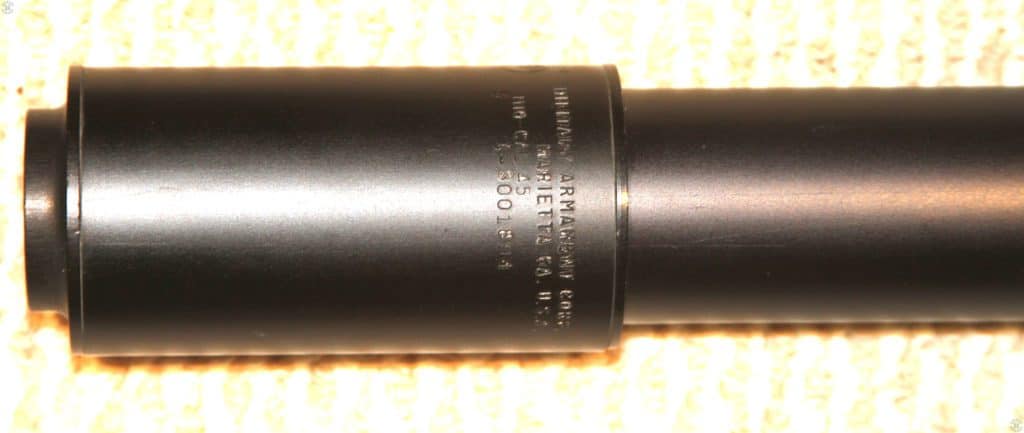
 

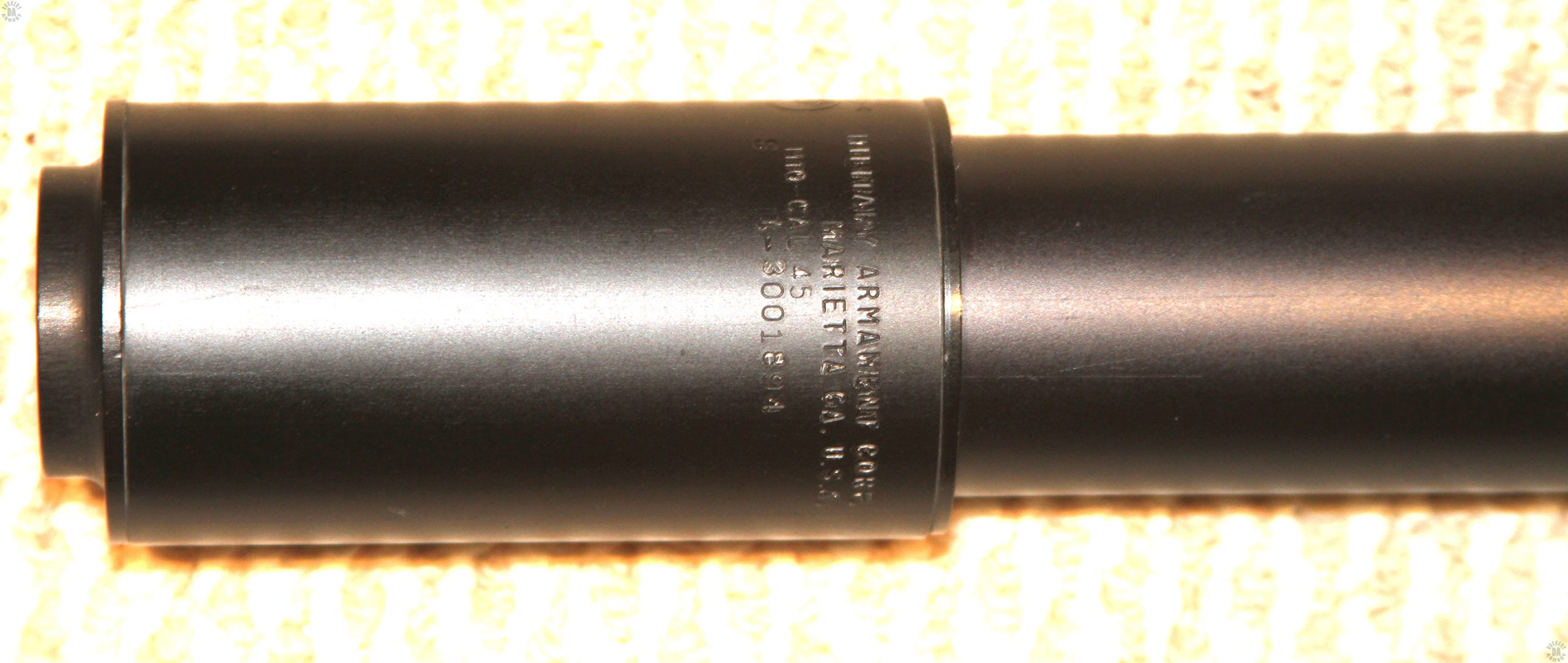
A close-up of the markings on an M10 .45 MAC suppressor. A portion of the serial number was removed in the processing of this photo. PHOTO CREDIT: Kevin Dockery

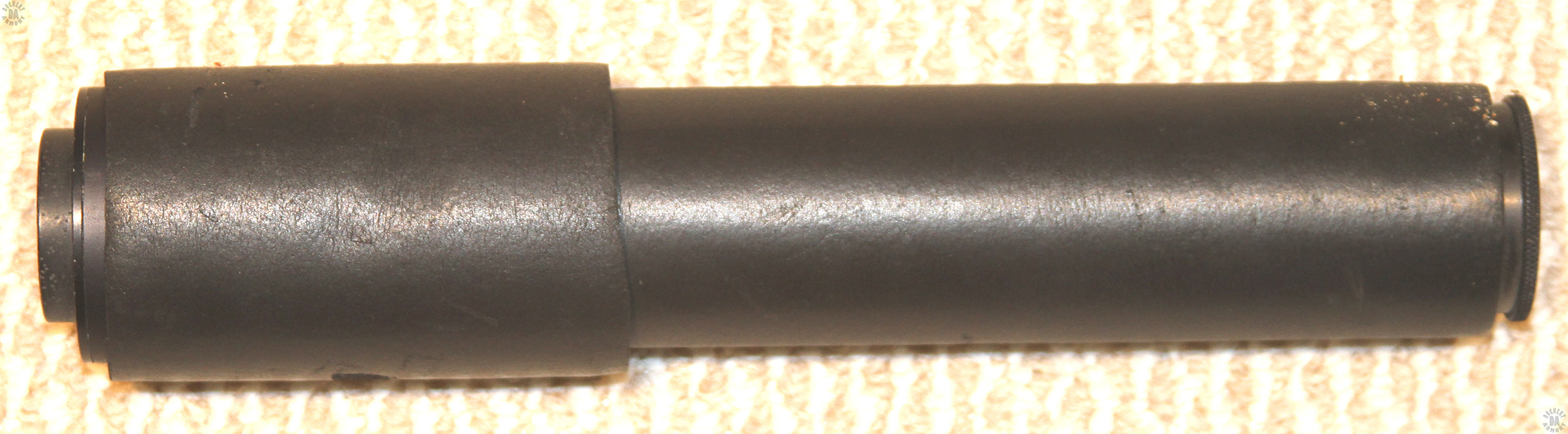
An original MAC suppressor with the first model neoprene insulating sleeves. Though the sleeves did protect the firer’s hand where using the suppressor, the tubes of the can quickly became very hot. The suppressor was able to melt the inside surfaces of the neoprene and cause it to glue itself to the suppressor. PHOTO CREDIT: Kevin Dockery

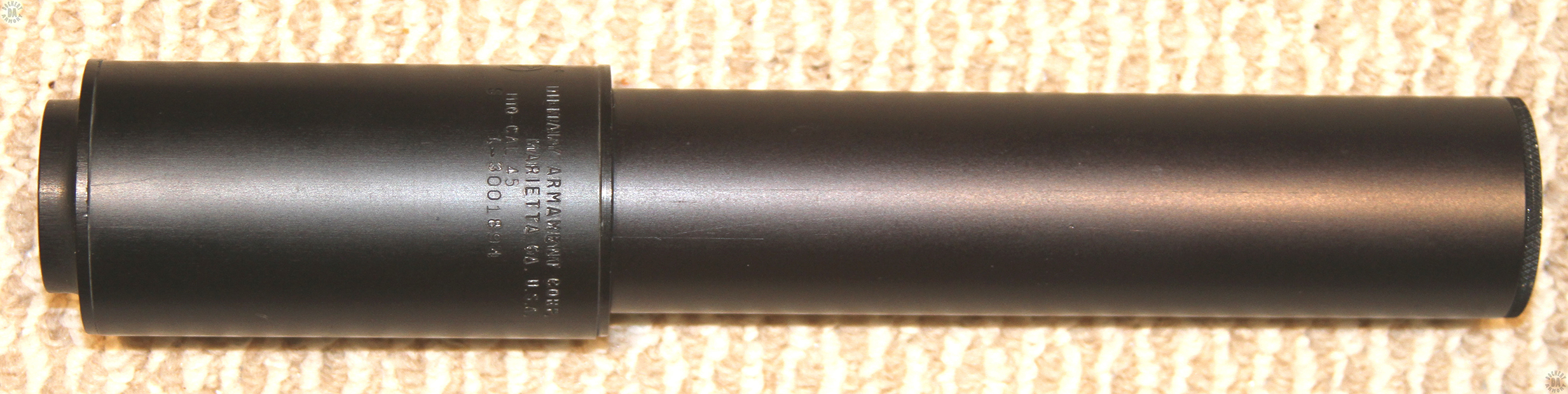
The side view of a MAC M10 .45 caliber suppressor. This specimen was produced at the second MAC facility in Marietta, Georgia. Externally, this suppressor is identical to the M10 9mm suppressor. The only differences between the two are some internal dimensions and the threads used to mount the suppressor to the host weapon. PHOTO CREDIT: Kevin Dockery

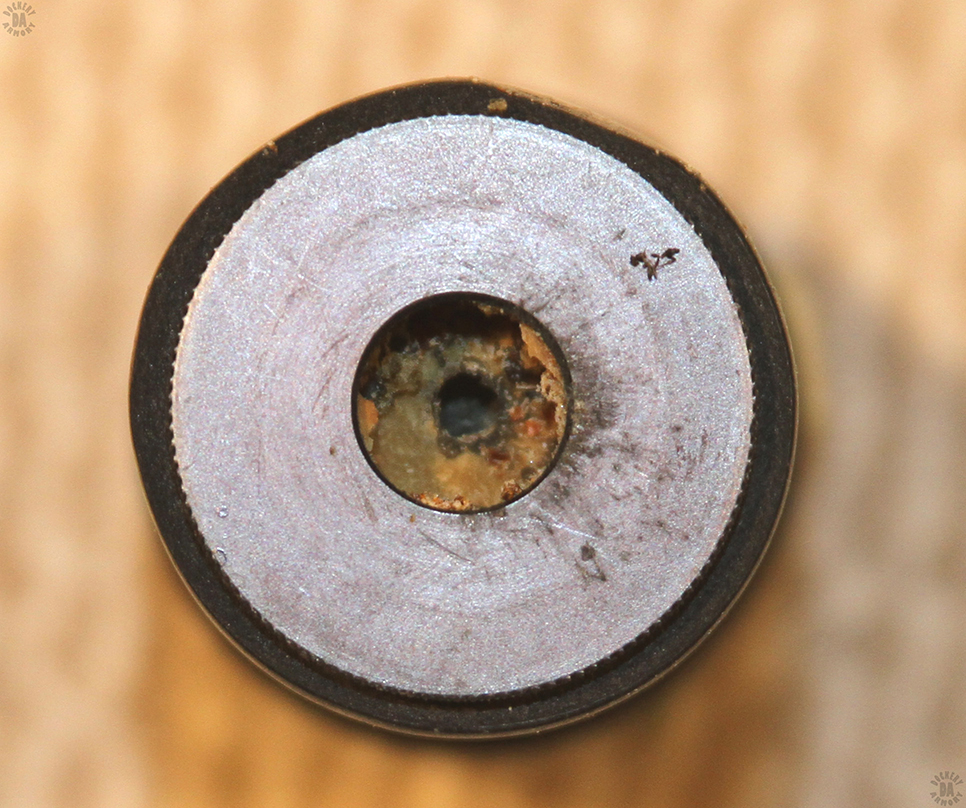
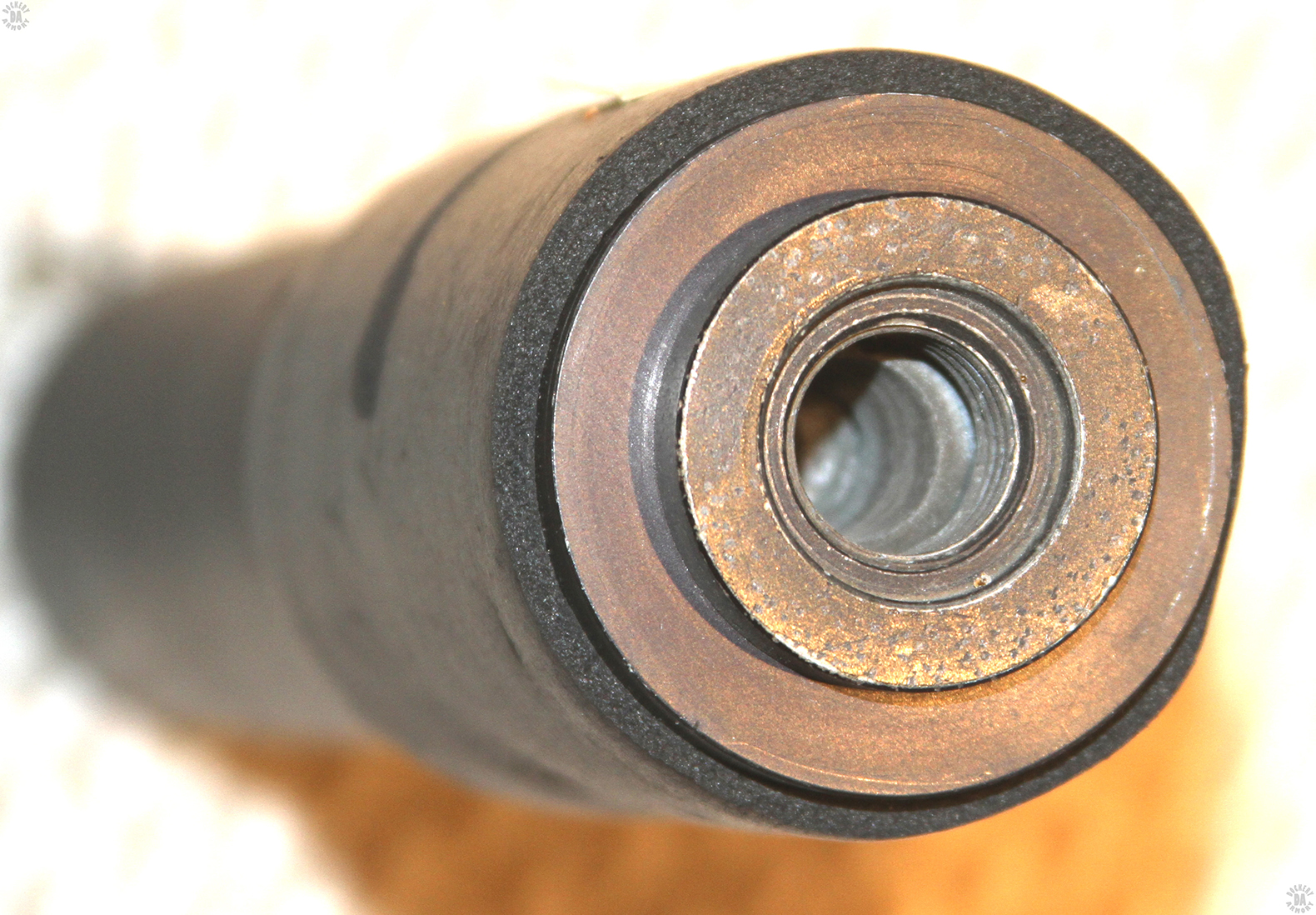
A look down the muzzle of a used original MAC 9mm suppressor for the Ingram M10 9. The crumbling tan material is what is remaining of the urethane wipes than made up the End Cap Assembly at the muzzle of the suppressor. The urethane material is broken up by the passage of the fired projectiles. As the wipe material wears away, the suppressor gradually loses efficiency at reducing the sound of firing. The wipes were intended to be replaced every 200 rounds or so as a regular part of maintenance of the suppressor. PHOTO CREDIT: Kevin Dockery

Looking into the breech end of an original (used) MAC 9mm suppressor. The treaded portion visible down in the hole are the threads that secure the suppressor to the muzzle of the Ingram M10 submachinegun. The discoloration inside the tube is from the residue of the propellant. The expansion tube of the suppressor can be seen surrounded by the early foam neoprene insulation. PHOTO CREDIT: Kevin Dockery