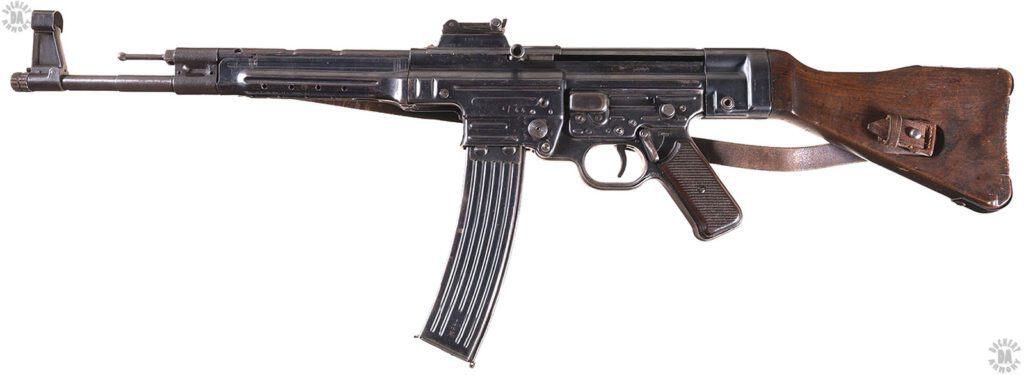
CODE 03-040-943
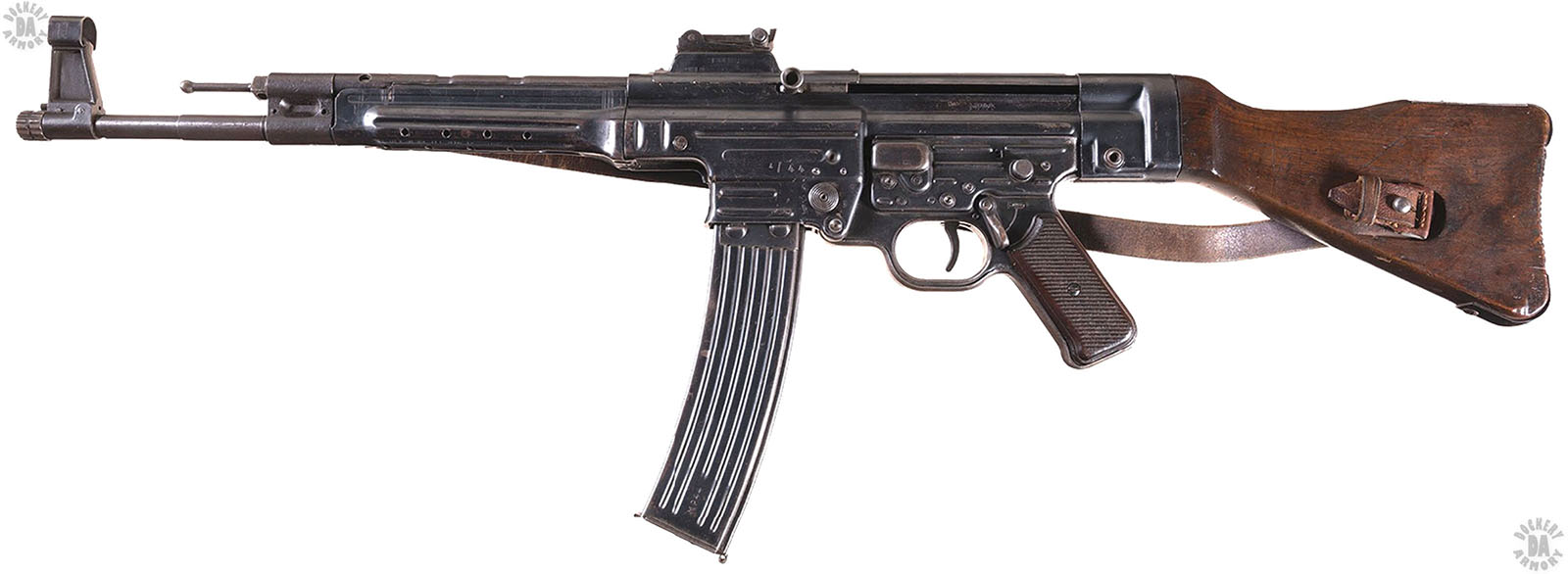
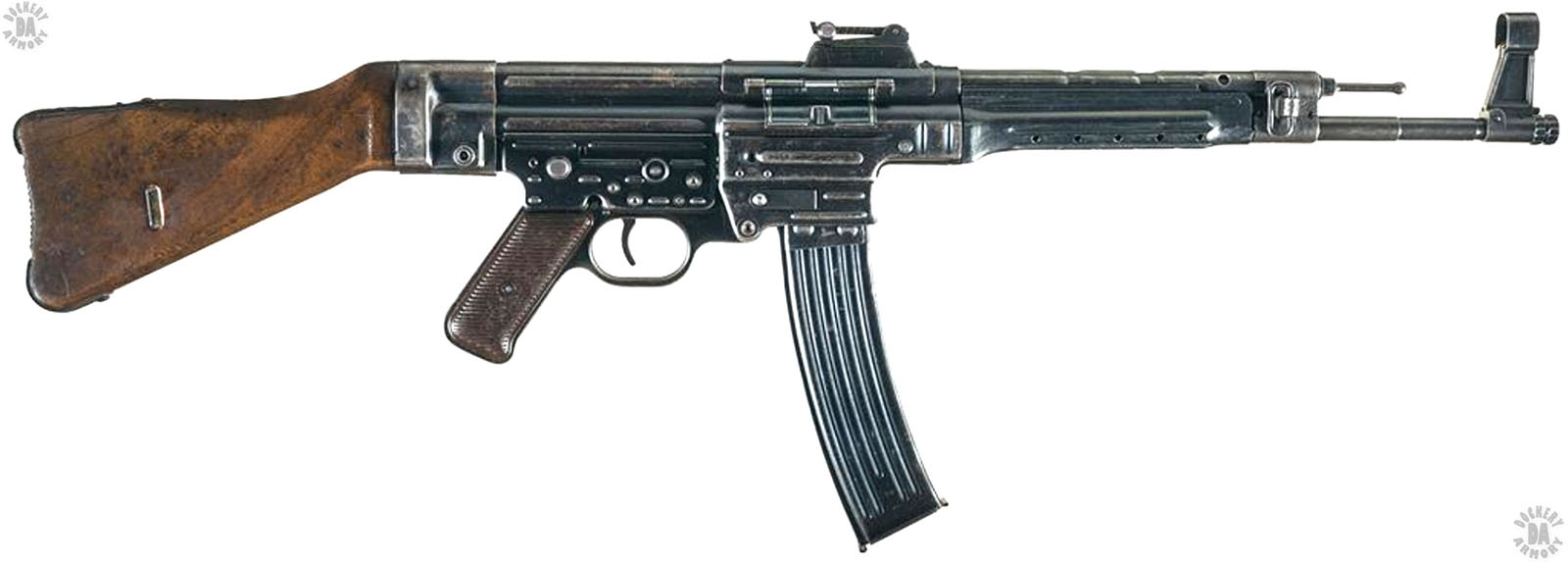
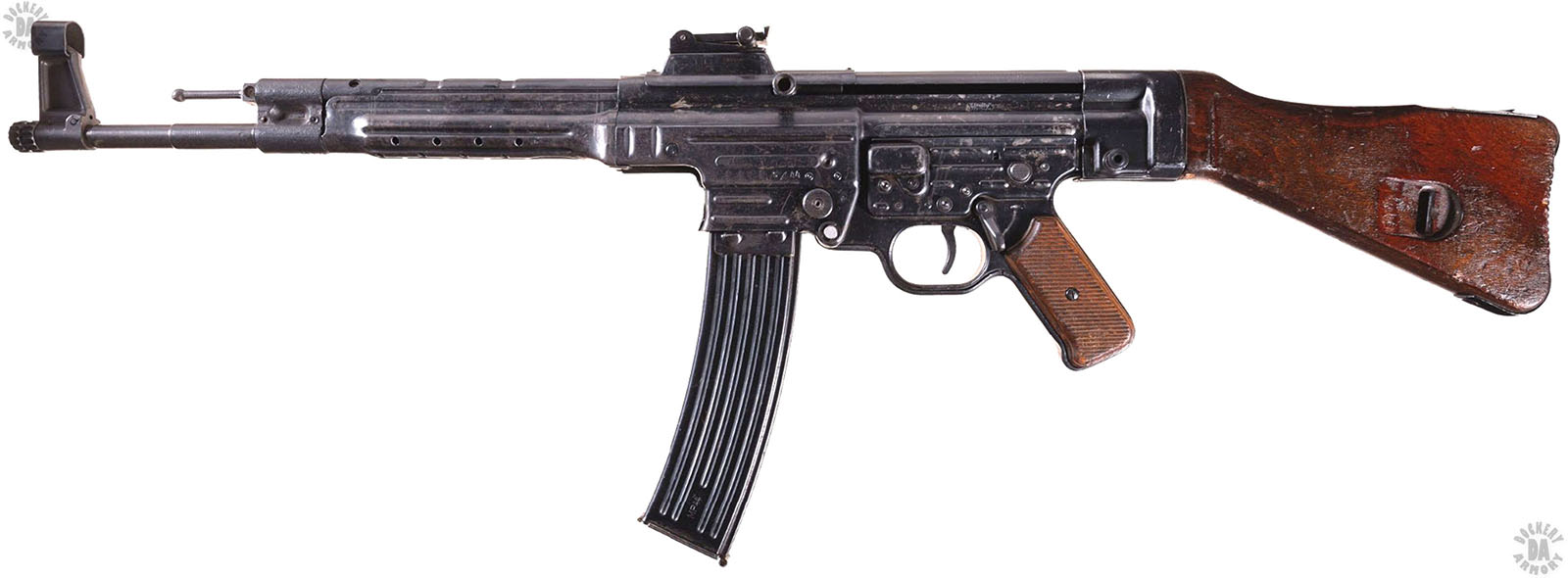
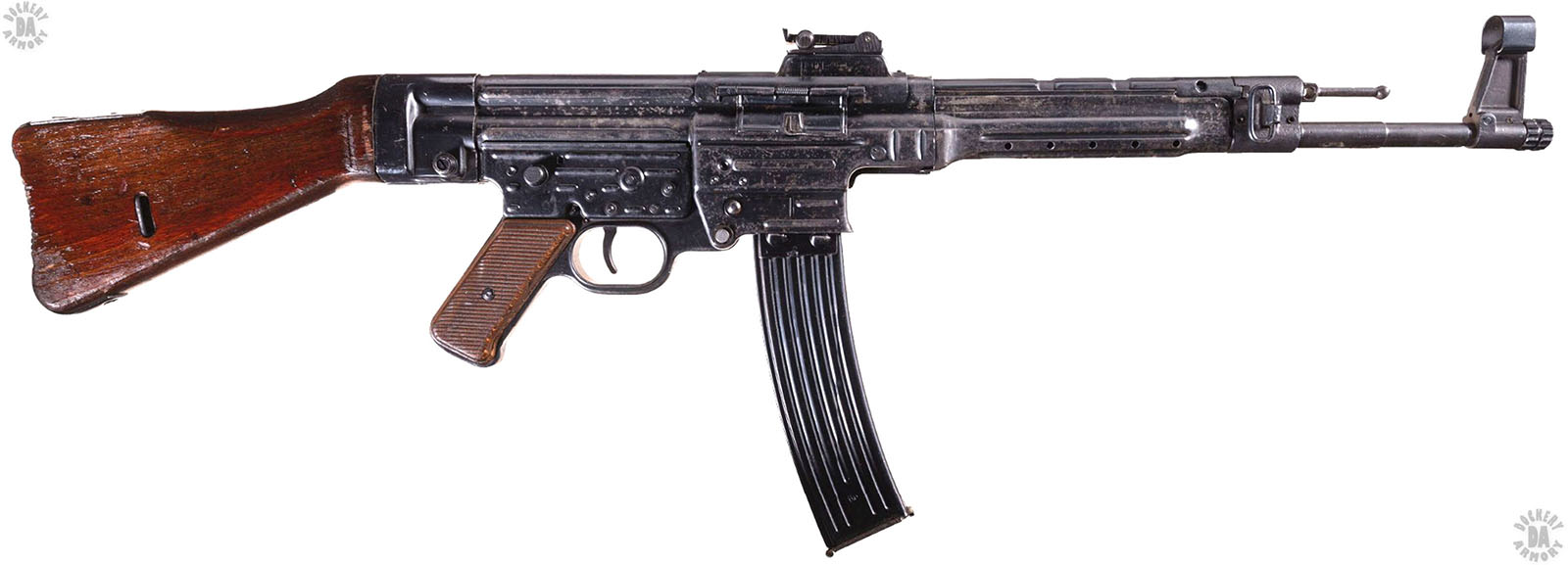
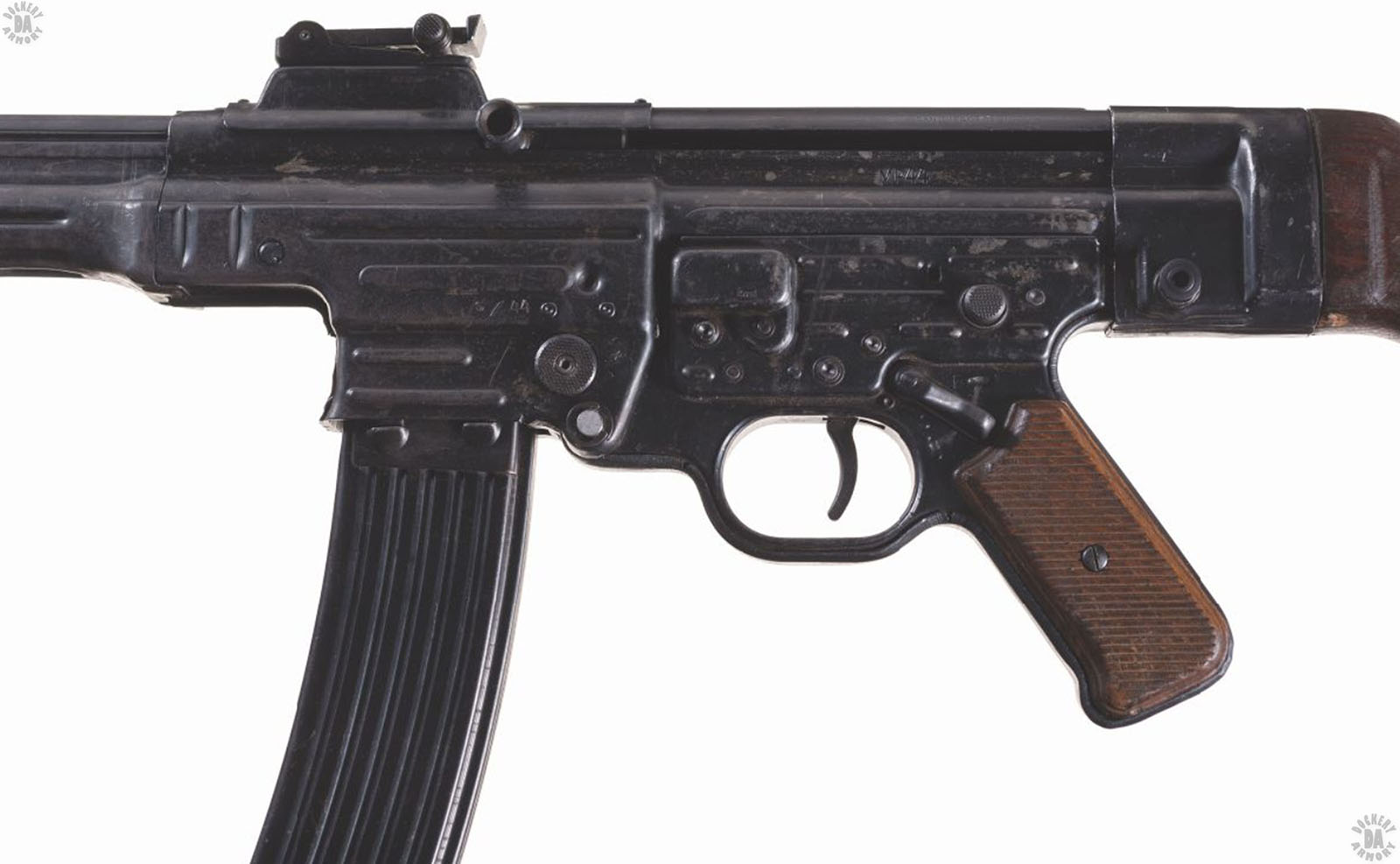
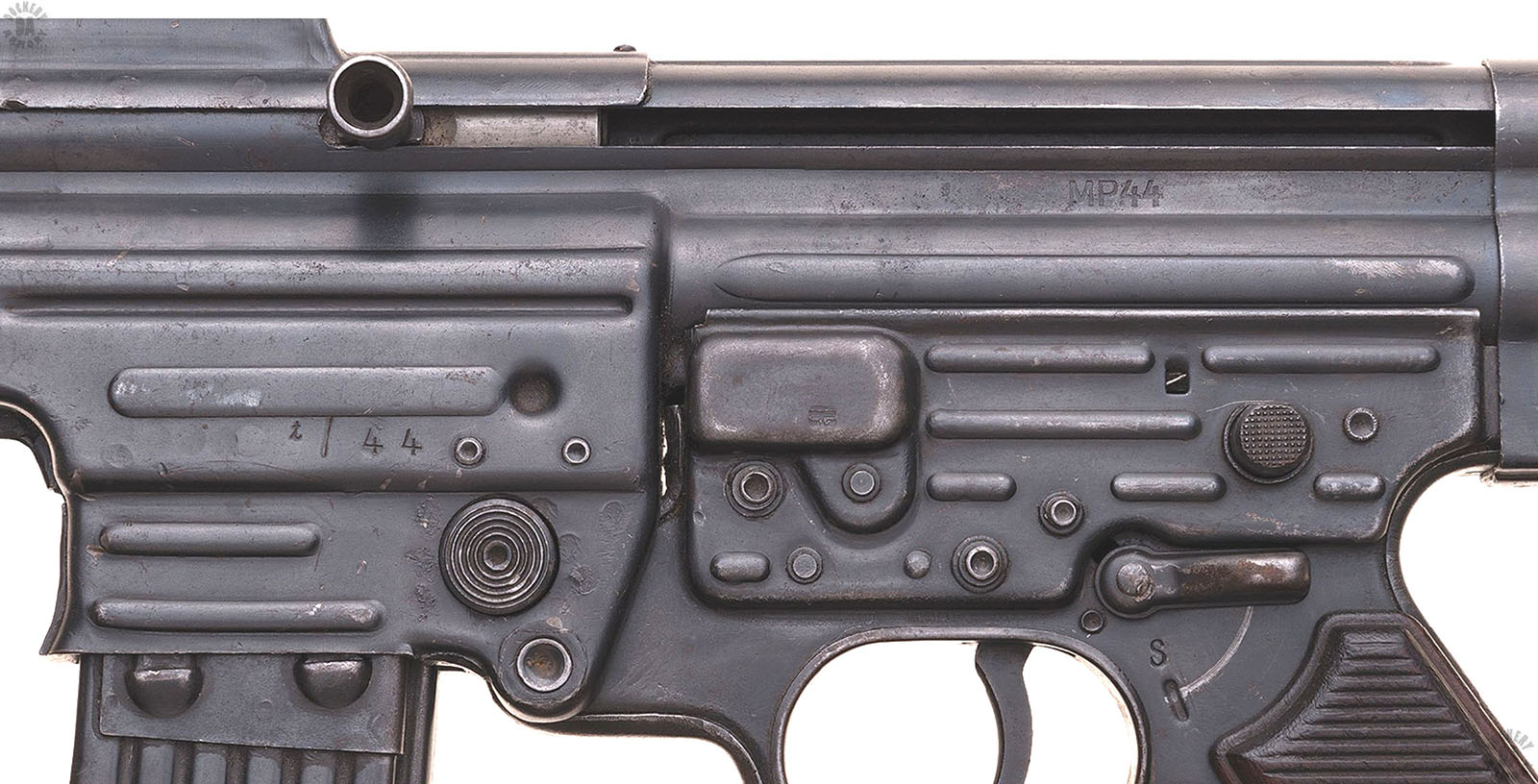
NAME – MP 44
NAME (NATIVE) – Maschinenpistole 44 [Machine pistol 44]
COUNTRY OF ORIGIN – Germany
DATE OF MANUFACTURE – 1944
CALIBER – 7.92×33 mm
OVERALL LENGTH – 94 cm (37 in)
BARREL LENGTH – 41.9 cm (16.5 in)
RIFLING (TYPE & TWIST) – 4 grooves, Right hand twist
LOAD – Full jacketed ball with iron core
BULLET DIAMETER – 8.23 mm (0.324 in)
BULLET WEIGHT – 8.19 g (126.4 grains)
MUZZLE VELOCITY – 685 m/s (2247 fps)
MUZZLE ENERGY – 1922 j (1417 ft/lb)
WEIGHT (EMPTY) – 4.56 kg (10 lb 1 oz)
WEIGHT (LOADED) – 5.50 kg (12 lb 2 oz) with 30 rounds Pist.Patr.43 SmE
SIGHTS – Open, Iron, Adjustable, Front sight- Inverted V blade, Rear sight- V-notch Tangent sight adjustable for range, Graduated from 100 to 800 meters (109 to 875 yards) in 100 meter (109 yard) increments
EFFECTIVE RANGE – 500 m (550 yards)
OPERATION – Gas
TYPE OF FIRE – Selective, semi and full automatic
RATE OF FIRE – 40 rpm Semi, 120 rpm full
CYCLIC ROF – 540 rpm
FEED DEVICE – 30 round removable box magazine, Double column, Double feed
FEED DEVICE WEIGHT (EMPTY) – 0.40 kg (14 oz)
FEED DEVICE WEIGHT (LOADED) – 0.94 kg (2 lb 1.2 oz) loaded with 30 rounds Pist.Patr.43 mit E
BASIC AMMUNITION LOAD – Six 30-round magazines (120 rounds)
LOAD WEIGHT – 5.46 kg (12 lb 0.6 oz)
MANUFACTURER – ERMA, Erfurt, Germany and Mauserwerk, Oberndorf, Germany. Both were primary contactors by 1944
STATUS – Obsolete
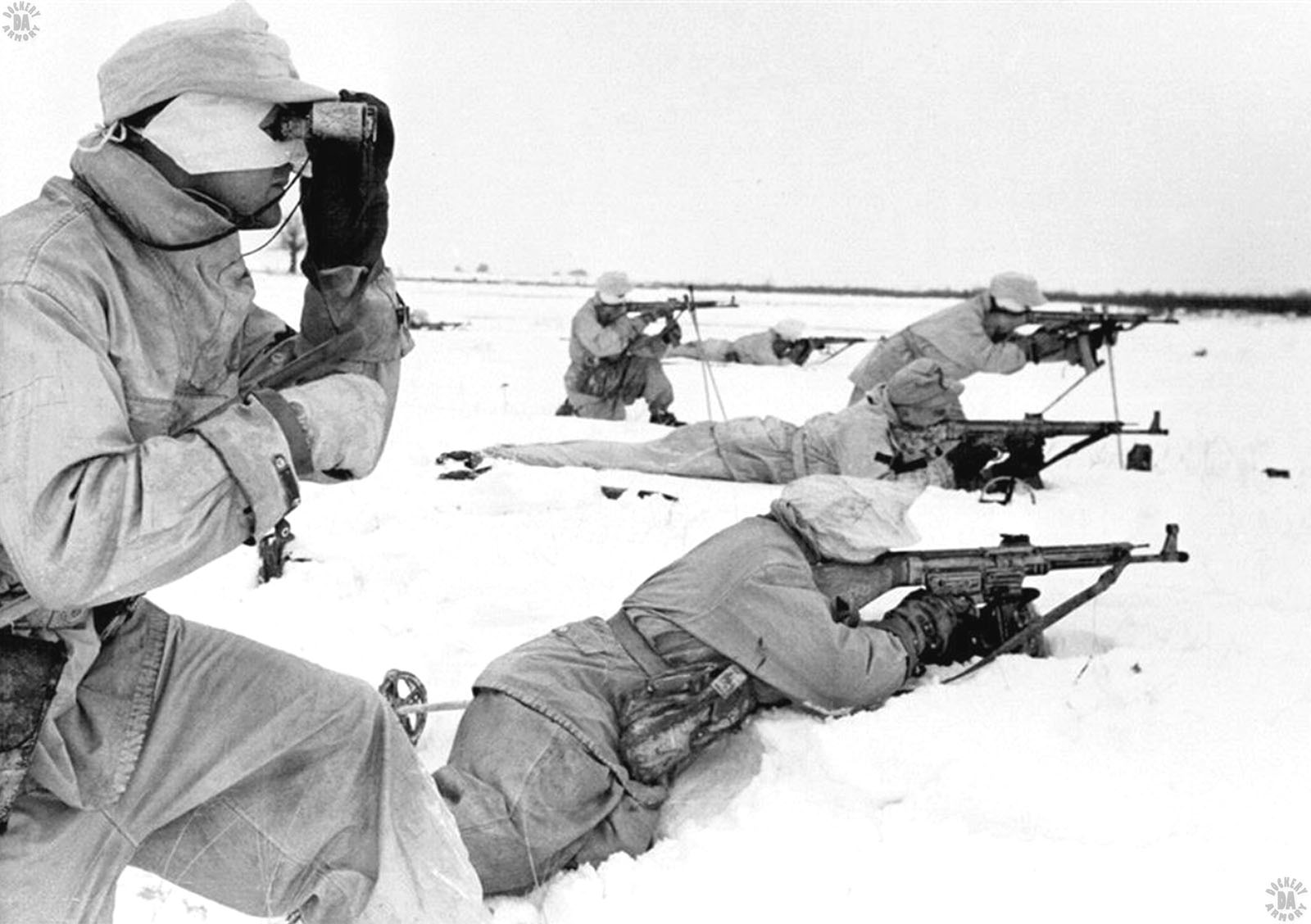
SERVICE – German military, found in irregular forces hands around the world after WWII.
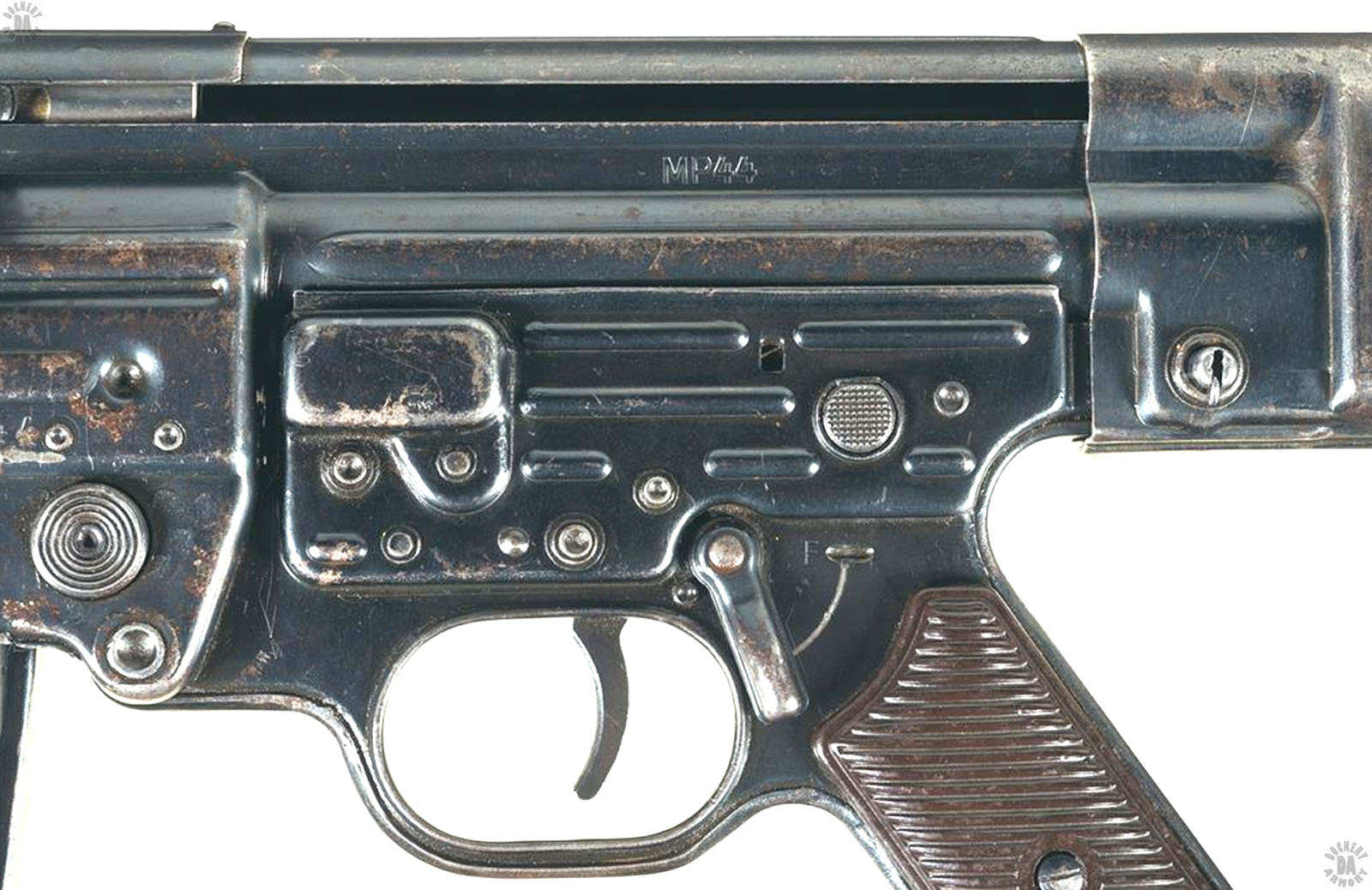
This weapon is the same as the earlier MP 43 except for the receiver markings. In an attempt to “finalize” the nomenclature for the new rifle, a name (and marking) change was ordered in April, 1944. From that point on, the designation was to be the MP 44. As the weapon was produced, various changes were made in the design. Some of these changes were simply due to the lack of raw materials and a simplification of manufacturing requirements. Additional changes included retaining the mounting bracket on the base of the rear sight for the use of a ZF 4 telescopic sight bracket on at least some of the production specimens.