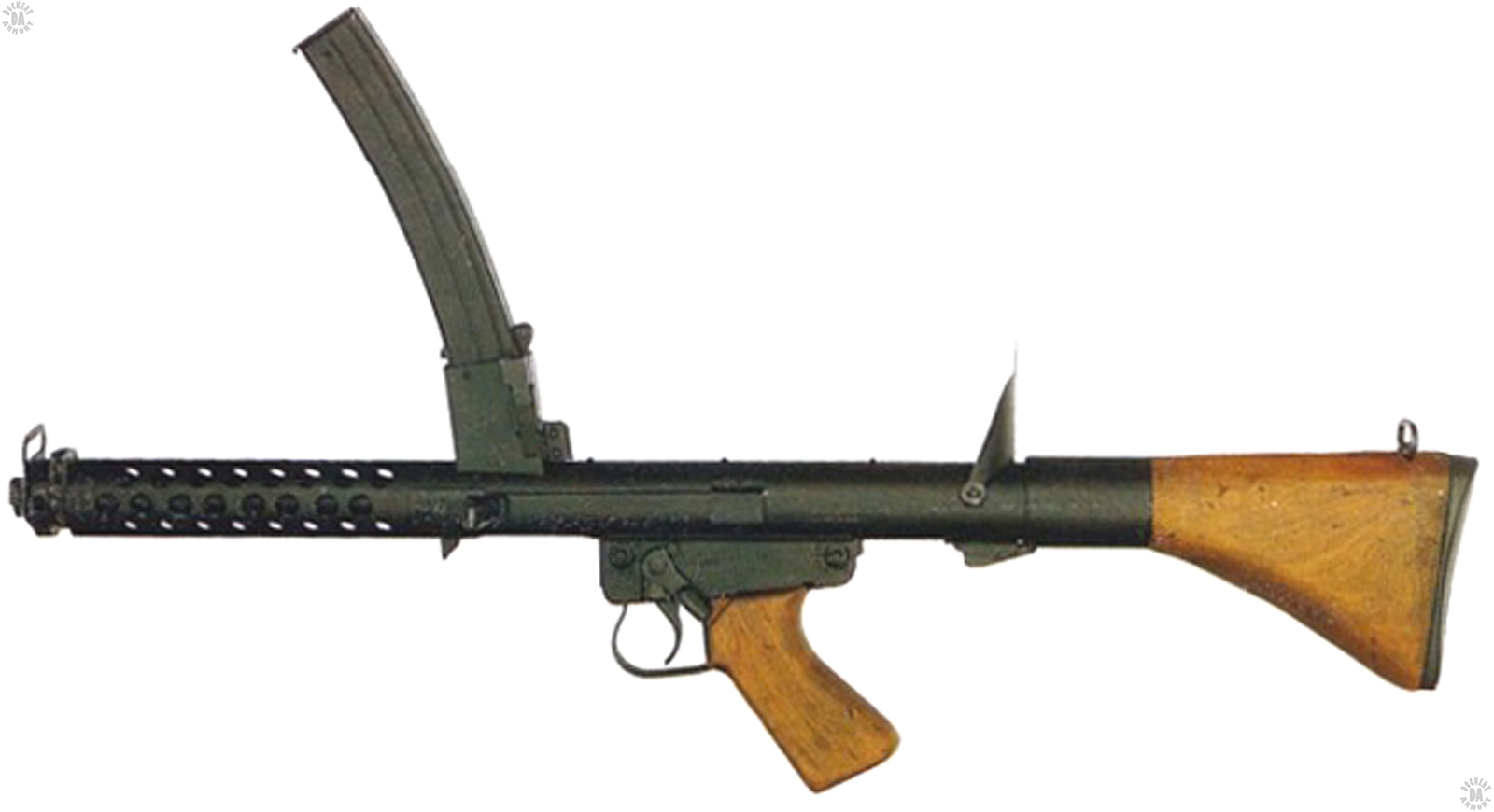
CODE – 02-006-963
NAME – F1
NAME (NATIVE) – Model X3 (Original designation)
COUNTRY OF ORIGIN – Australia
DATE OF MANUFACTURE – 1963-1972
CALIBER – 9x19mm
OVERALL LENGTH – 71 cm (28 in)
BARREL LENGTH – 20.3 cm (8 in)
RIFLING (TYPE & TWIST) – 6 Groove, Concentric, Right-hand twist
BULLET DIAMETER – 9.02 mm (0.355 in)
BULLET WEIGHT – 8.04 g (124 gr)
MUZZLE VELOCITY – 366 m/s (1200 fps)
MUZZLE ENERGY – 538 j (397 ft/lbs)
WEIGHT (EMPTY) – 3.27 kg (7 lbs 3 oz )
WEIGHT (LOADED) – 4 kg (8 lbs 9 oz) with 34 rds
SIGHTS – Front sight – Offset blade, Rear sight – Offset folding, with fixed aperture peep
EFFECTIVE RANGE – 150 m (164 yds)
OPERATION – Blowback, Fires from open bolt
TYPE OF FIRE – Selective fire, Progressive trigger, Semi and Full automatic
RATE OF FIRE – 40 rpm (Semi), 120 rpm (Full)
CYCLIC ROF – 600 rpm
FEED DEVICE – 34 round box magazine, double column, double feed
FEED DEVICE WEIGHT (EMPTY) – 0.30 kg (10.6 oz)
FEED DEVICE WEIGHT (LOADED) – 0.73 kg (1 lb 10 oz))
BASIC AMMUNITION LOAD – 5 magazines (170 rds)
LOAD WEIGHT – 3.65 kg (8 lbs 42 oz)
MANUFACTURER – Lithgow Small Arms Factory, Lithgow, New South Wales, Australia
STATUS – Obsolescent
SERVICE – Australian military, replaced in 1992
Designed by the Australians as a replacement for the Owen submachinegun, the F1 incorporated design features from the Owen as well as the British Sterling submachineguns. The basic layout of the F1 was in the “In-Line” style to help keep the muzzle from rising in full automatic fire. The barrel was in line with the upper part of the stock where it would bear on the operators shoulder. The perforated barrel jacket was adopted from the Sterling design, but did away with the vertical forward grip. That feature was missed by many Australian troops familiar with the earlier Owen.
The mechanism above the trigger on the left side of the weapon is the manual safety switch. Pushing the switch up locks the weapon while pressing it down allows for firing the gun. The selector for semi or full automatic fire is in the progressive trigger mechanism. Pulling the trigger back halfway allows the weapon to fire one shot and then holds the bolt to the rear. Pulling the trigger all the way back and holding it allows for full automatic fire. This is actually a very simple operation that takes relatively little training time for the average troop to handle.
The curved magazine is a direct copy of the British Sterling submachinegun magazine. The F1 may also use magazines from the earlier Owen and Austen weapons. The Sterling magazine design was not licensed to Australia, but an understanding allowed the Australians to use the design as long as they did not sell them on the international market.
The ejection port is on the bottom of the receiver, directly below the magazine. In front of the port is a small metal lug to help keep the firers hand from slipping back and into the port. The rear sight folds forward for protection and the peep is slightly offset to the right to avoid the vertical magazine. The front sight is not at the muzzle but instead is mounted on, and extends out from, the right side of the magazine housing.
Some 25,000 F1 submachineguns were manufactured from 1963 to 1973, though the weapon remained in front line use into the early 1990s when it was replaced in the Australian military by their adoption of the Austrian AUG.