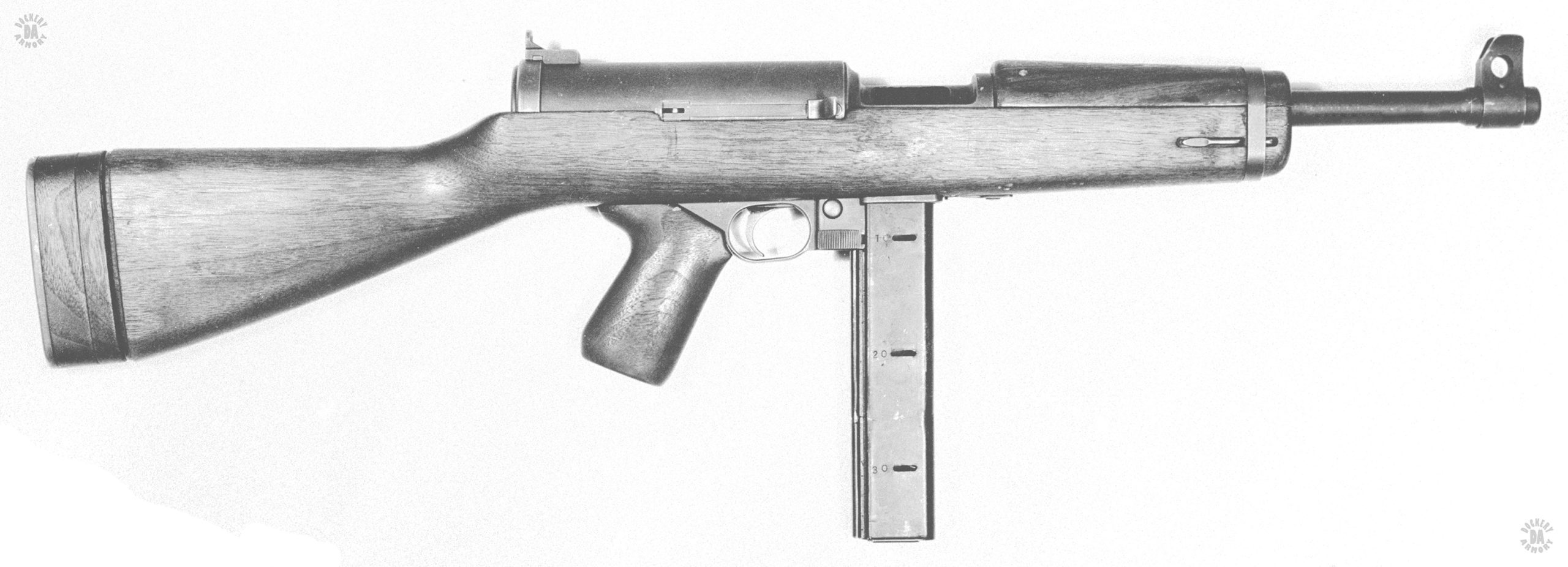
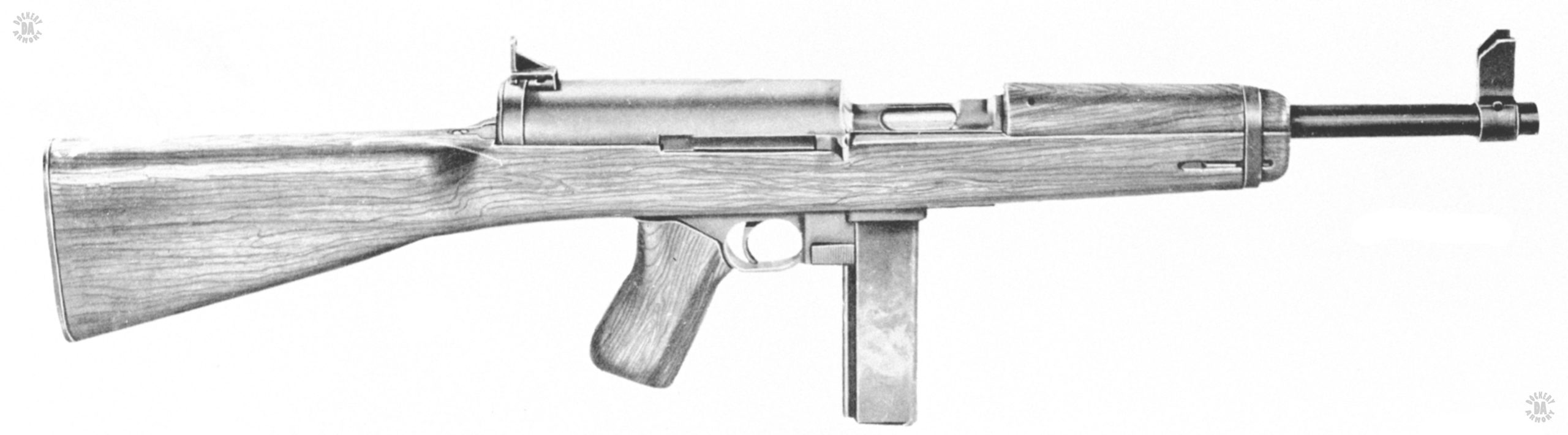
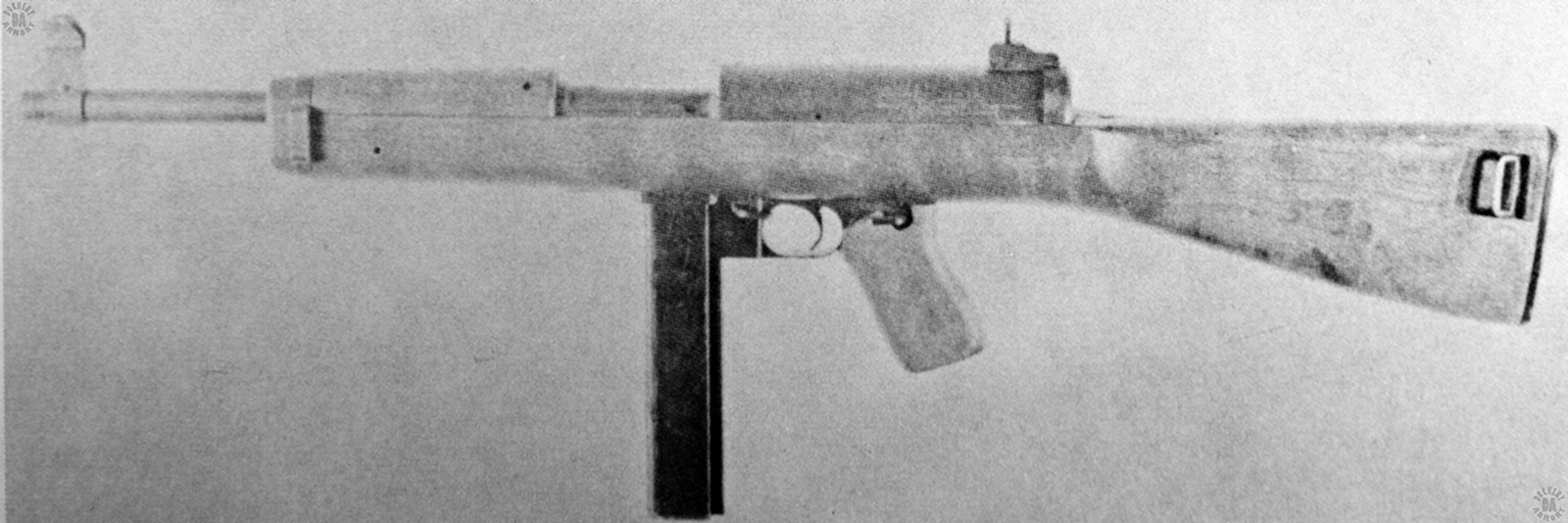
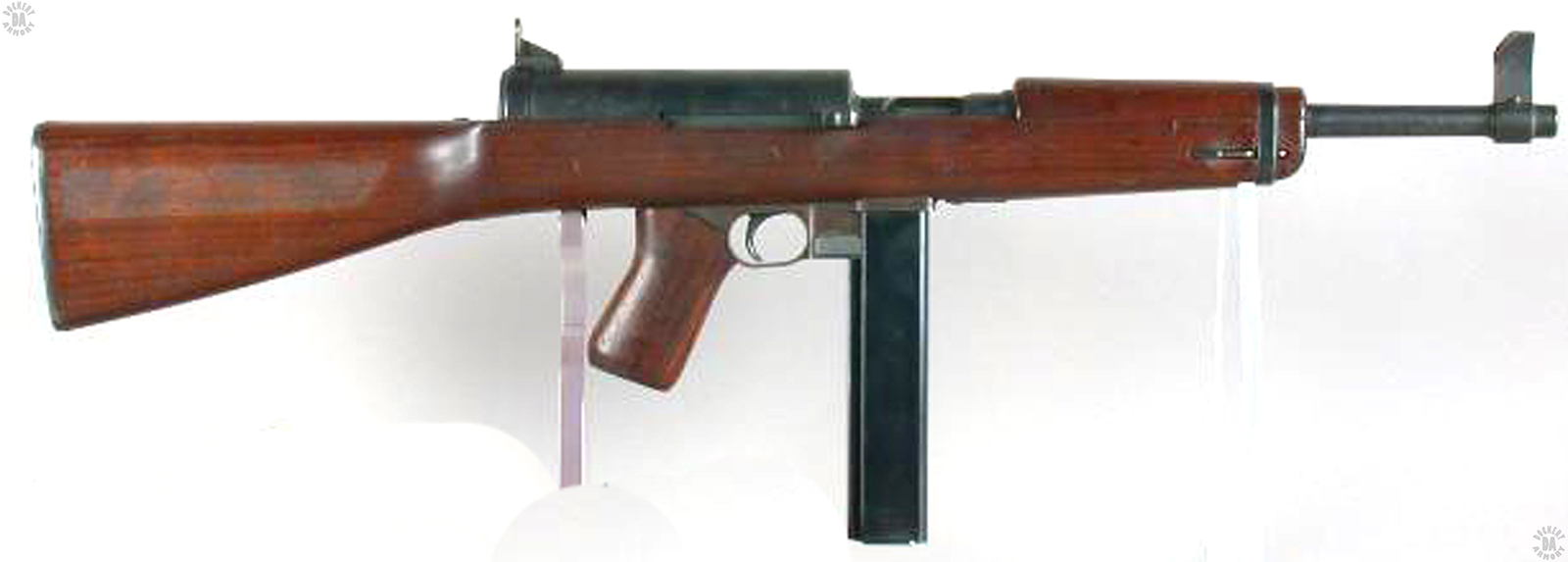
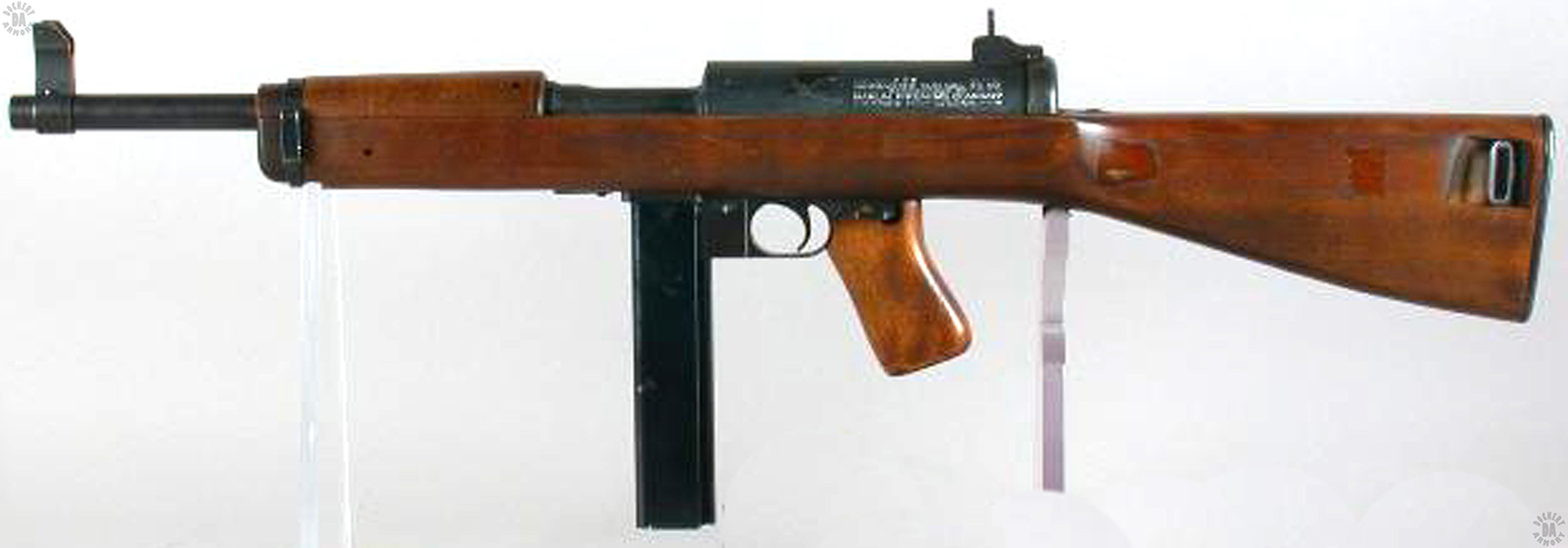
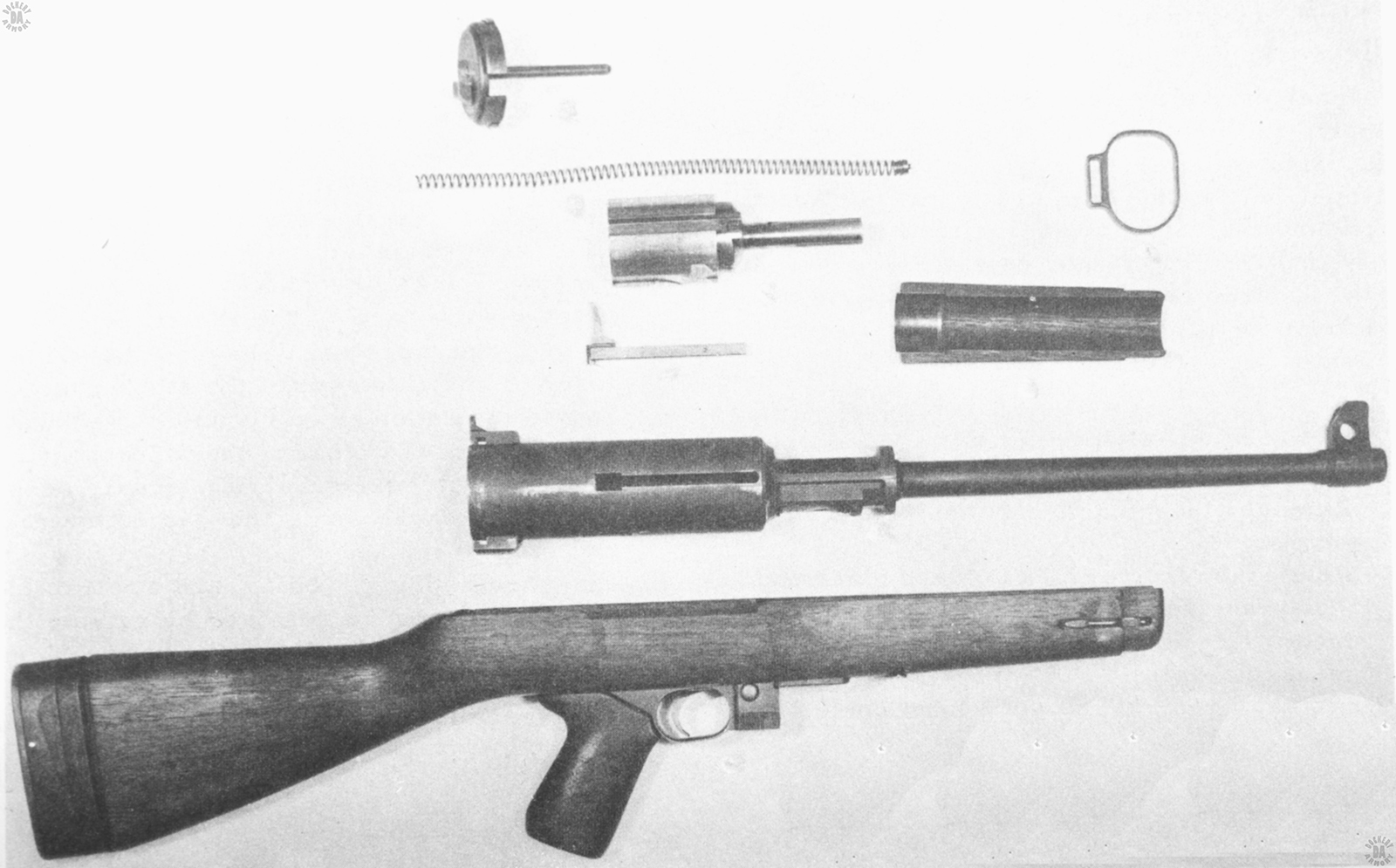
NAME – Hyde-Inland M2
NAME (NATIVE) – Submachine Gun, Cal. .45, M2
COMMON NAMES – M2 Submachine gun
COUNTRY OF ORIGIN – USA
DATE OF MANUFACTURE – 1942
CALIBER – 11.43x23mm (.45 ACP)
OVERALL LENGTH – 81.5 cm (32.1 in)
BARREL LENGTH – 30.7 cm (12.1 in)
RIFLING (TYPE & TWIST) – 4 grooves, Right hand twist
BULLET DIAMETER – 11.46 mm (0.451 in)
BULLET WEIGHT – 15 g (230 grain)
MUZZLE VELOCITY – 293 m/s (960 fps)
MUZZLE ENERGY – 638 j (471 ft/lbs)
WEIGHT (EMPTY) – 4.20 kg (9 lbs 4 oz)
WEIGHT (LOADED) – 5.06 kg (11 lbs 2.3 oz) with 30 round magazine
SIGHTS – Front – Blade, Rear – Fixed aperture sight with “V” notch above
EFFECTIVE RANGE – 183 m (200 yds)
OPERATION – Blowback, fires from open bolt
TYPE OF FIRE – Selective fire, Semi and Full automatic
CYCLIC ROF – 500 rpm
RATE OF FIRE – 40 rpm (Semi), 80 rpm (Full)
FEED DEVICE – 20 and 30 round box magazines, Double column, Double feed (Thompson Magazines)
FEED DEVICE WEIGHT (EMPTY) – 20 rd 0.18 kg (6.4 oz), 30 rd 0.23 kg (8 oz)
FEED DEVICE WEIGHT (LOADED) – 20 rd 0.6 kg (1 lb 5.2 oz), 30 rd 0.86 kg (1 lb 14.3 oz)
BASIC AMMUNITION LOAD – 6 – 30 round magazines (180 rounds)
LOAD WEIGHT – 5.16 kg (11 lbs 5.8 oz)
MANUFACTURER – Inland Division, General Motors Corporation, Marlin Firearms Company, New Haven, Connecticut.
STATUS – Obsolete
SERVICE – Designated “Substitute Standard” in April, 1942
Designed by George Hyde, this was an evolution of his previous weapons. Submitted as the Hyde-Inland II in June, 1942. The design proved superior to the M1 and M1928A1 Thompsons in general accuracy, particularly in full automatic fire. Minor improvements to the basic design (deepening the magazine well and redo the buffer) resulted in the weapon being recommended for adoption. Many difficulties prevented the weapon from reaching production until May, 1943. That was five months after the M3 “Greasegun” had been standardized. The production of the M2 was ceased after about 400 weapons had been produced.