CODE – 02-040-926

NAME – MP 18/I (Modified)

COUNTRY OF ORIGIN – Post WWI Germany

DATE OF MANUFACTURE – 1920s through 30s

WEIGHT (EMPTY) – 4.05 kg (8 lbs 15 oz)

WEIGHT (LOADED) – 4.52 kg (9 lbs 15 oz) with 20 round magazine

SIGHTS – Front sight – inverted V-blade, Rear sight – L-shaped flip sight, V-notches for 100 and 200 meters

EFFECTIVE RANGE – 200 m (219 yds)

MAXIMUM RANGE 1600 m (1750 yds)

OPERATION – Blowback, fires from open bolt

TYPE OF FIRE – Full automatic only

RATE OF FIRE – 80 rpm

CYCLIC ROF – 350 – 450 rpm

FEED DEVICE – 20 or 32 round box magazine, Double column, single feed

FEED DEVICE WEIGHT (EMPTY) – 20 round 0.24 kg (8 oz), (32 round – 0.31 kg (11 oz)

FEED DEVICE WEIGHT (LOADED) – 20 round – 0.47 kg (1lb. 0.6 oz), 32 round – 0.67 kg (1 lb 8 oz)

BASIC AMMUNITION LOAD – 4 – 20 round magazines (80 rounds) Police use

LOAD WEIGHT – 1.88 kg (4lbs 2 oz)

MANUFACTURER – C. G. Haenel Waffenfabrik, Suhl (Modification of original MP 18/I

STATUS – Obsolete

SERVICE – Post WWI German police use, remaining stocks taken for substitute-standard use by German army in 1939

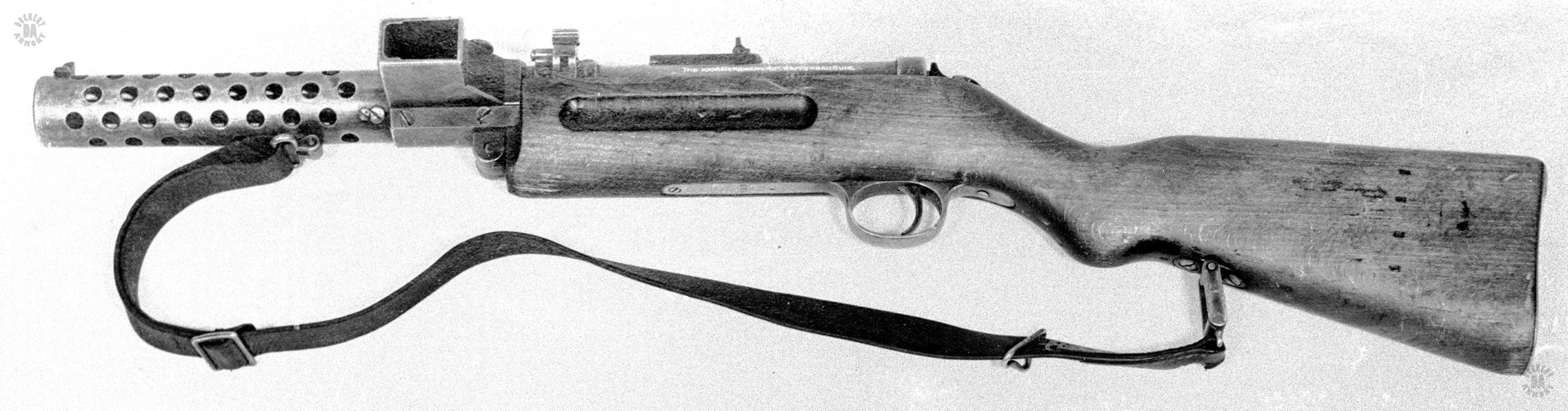
   Modifications to the MP 18/I were suggested by Hugo Schmeisser in the 1920s. These modifications included the replacement of the angled feed collar used for the 32-round drum magazine with a straight design that could use a box magazine. For use with the straight collar was a Schmeisser-designed sheet-metal box magazine which held two columns of cartridges feeding to a central position. Both the magazine and the collar were included in a Schmeisser-held patent, which was signed over to the Haenel company in Suhl, Germany. Over the years between the World Wars, most of the existing MP 18/I weapons were converted to the box magazine.
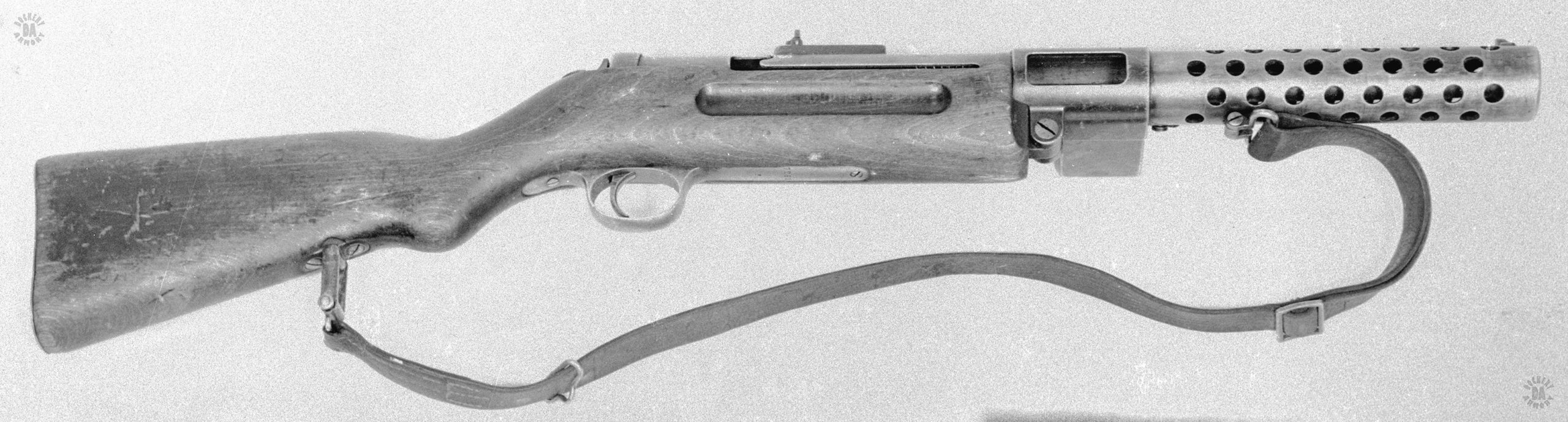
 

A lower right side view of the modified MP18-I submachinegun. The bolt and mainspring are missing on this specimen. On the left side of the new magazine housing is a straight magazine well to take a 20-round double column magazine. Because of the modification of the magazine housing from the single column snail drum magazine to the straight box double column design, the rounds had to be presented to the chamber from a single position for proper feeding. This was the weakest point in the weapons design at it continued to be used in German and other countries for decades. The hinge for opening the weapon is plain in this view underneath and part of the magazine housing. PHOTO CREDIT: US Army

In this left side view of the modified MP 18-I the new magazine housing to accept the 20-round box magazine can be plainly seen. Just above and behind the magazine housing is a special bolt lock system that was placed on MP 18 weapons that were issued to German police in post WWI Germany. The system would lock the bolt solidly in the forward position, preventing any accidental discharge if the weapon was dropped or struck solidly on the butt. PHOTO CREDIT: US Army